
There is a specific kind of frustration that shows up on angler message boards every single season. You paddle for forty minutes, find a clean shoreline with good structure, and then realize you have burned your entire morning just getting there. Now you are stuck, either staying put and catching far less than you should, or packing up before the water ever got productive.
That is the problem the best trolling motors for kayaks solve. A small electric motor turns a human-powered boat into a machine that can run for hours, hold position over a fish-holding structure, and get you back to the ramp when the light fades. I have spent the last few months rigging, charging, and running these motors on fishing kayaks in wind, current, and open water, and the difference in a full day on the water is dramatic.
What surprised me most is how much of the buying decision comes down to three unglamorous questions. How do you steer it? Where does the battery go without upsetting your trim? And does the thrust rating match your actual kayak length? Get those three answers right and the rest is detail. Get them wrong and you will be paddling with a heavy, awkward boat that tracks badly.
In this roundup I put seven kayak trolling motors through the same checklist. I compared their thrust ratings against kayak length, looked at how each steering method actually feels in use, measured what the battery meters tell you versus what the speed settings cost, and checked which ones tolerate saltwater. I also weighed the practical issues anglers mention most: shaft length compatibility with high-deck boats, bracket adjustment range, and whether the unit can be carried to a launch by one person.
If you have not chosen your boat yet, start with our 12 best fishing kayaks guide first. Motor selection depends entirely on hull size, deck height, and whether the kayak has a rear tank well or accessory tracks for mounting hardware.
Table of Contents
- Our Top 3 Kayak Trolling Motors for Different Paddlers
- Every Kayak Trolling Motor in This Roundup Compared
- 1. Minn Kota Endura C2 – The Lightweight Transom Motor That Starts Every Setup
- Minn Kota Endura C2 Transom-Mount Electric Trolling Motor – 30 Lb. Thrust, 30 In. Shaft, Freshwater
- 30 lb of thrust suits a kayak under about 11 ft
- Tiller steering keeps it hands-on by design
- The 10-position lever lock bracket does the real adapting work
- A composite shaft and Power Prop handle grass and logs
- 2. Minn Kota Edge 45 – Foot Pedal Control That Keeps Both Hands on the Rod
- Minn Kota Edge Bow-Mount Electric Trolling Motor with Foot Pedal Control – 45 Lb. Thrust, 36 In. Shaft, Freshwater
- Foot pedal steering is cable-steered, and the learning curve is real
- 45 lb of thrust covers a mid-size fishing kayak in wind and current
- The latch-and-door bracket makes stow and removal quick
- At 18 lb it is the second-lightest motor we tested
- Shaft length is the number to check on this one
- 3. Newport NV-Series 55 – The Most Established Saltwater Setup Here
- Newport NV-Series 55lb Thrust Saltwater Transom Mounted Trolling Electric Trolling Motor w/ LED Battery Indicator & 30″ Shaft (23M1000203)
- 55 lb of thrust on 12V reaches about 4 mph
- A 3-blade prop supplies the low-end torque anglers want
- Mount angle, height and direction all adjust and lock
- Build quality is saltwater-focused
- 4. Minn Kota Endura Max – Digital Maximizer Extends the Runtime Others Cannot
- Minn Kota Endura Max Transom-Mount Electric Trolling Motor – 55 Lb. Thrust, 36 In. Shaft, Freshwater
- Digital Maximizer is why this motor out-runs its class
- 55 lb thrust needs a longer, wider kayak to stay balanced
- A push-to-test battery meter keeps the charge in view
- The lever lock bracket again earns its keep
- 5. PEXMOR 26 lb – The Smallest Motor That Still Fits a Compact Kayak
- PEXMOR 36LBS Thrust 8 Speed Electric Trolling Motor, Electric Outboard Boat Motor w/Adjustable Handle & LED Indicator, Transom Mounted for Saltwater, Kayak, Fishing Boat
- 26 lb thrust is the gentlest option here
- Button-release depth and angle adjustment takes seconds
- A 1-10 LED indicator shows charge at a glance
- One year of warranty and 50 ratings are the trade-offs
- 6. BODIOO 68 lb – The Highest Thrust Rating in the Lineup
- 68LB Thrust Trolling Motor 8 Speed Electric Outboard Motor Boat Kayak Motor with 6’’ Adjustable Handle 30” Shaft Length & LED Indicator Transom Mounted for Kayak, Fishing Boat
- 68 lb of thrust is the biggest number here, with a caveat
- Running noise around 50dB suits fishing over
- A 30-inch shaft and 20.72 lb weight fit kayak storage
- The warranty is the weakest number on this motor
- 7. Haswing 55 Bow Mount – Wireless Remote Range No Other Motor Here Offers
- How to Choose a Kayak Trolling Motor Without Regretting It
- Frequently Asked Questions
- Final Verdict: Which Kayak Trolling Motor Fits How You Fish
Our Top 3 Kayak Trolling Motors for Different Paddlers

Minn Kota Endura C2
EDITOR'S CHOICE
- 30 lb thrust
- 30 in composite shaft
- 6 in telescoping tiller
- 10-position lever lock bracket
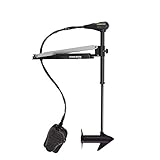
Minn Kota Edge 45
PREMIUM PICK
- 45 lb thrust
- 36 in shaft
- Foot pedal steering
- Latch-and-door bracket

Newport NV-Series 55
BEST VALUE
- 55 lb thrust
- 3-blade prop
- 5 forward 3 reverse speeds
- LED battery meter
As an Amazon Associate we earn from qualifying purchases. CERTAIN CONTENT THAT APPEARS ON THIS SITE COMES FROM AMAZON. THIS CONTENT IS PROVIDED 'AS IS' AND IS SUBJECT TO CHANGE OR REMOVAL AT ANY TIME.
The Endura C2 wins this roundup because it does the fundamentals better than anything else here. At 17 pounds with a 30-inch shaft, it is light enough to lift into a rear tank well with one hand, and its 10-position lever lock bracket is the most forgiving mounting hardware we tested. It runs on a single 12V battery, steers with a simple tiller, and holds a 4.7 average across more than 600 ratings.
The Edge 45 earns its place for a specific reason: foot pedal steering. If casting is the point of your day, having both hands available changes how the whole trip feels. The cable steer takes practice, but once you learn it you will not want to go back.
The Newport NV-Series 55 is the most established saltwater-capable setup in the group, with more than 3,300 ratings behind it. It is heavier than a kayak wants, so it suits anglers running a wide, stable hull with a stern mount rather than a narrow sit-on-top.
Every Kayak Trolling Motor in This Roundup Compared
| No | Gear | Why it earns bag space | Check |
|---|---|---|---|
| 1 | |
|
Check Latest Price |
| 2 | |
|
Check Latest Price |
| 3 | |
|
Check Latest Price |
| 4 | 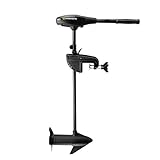 |
|
Check Latest Price |
| 5 | 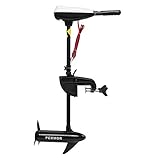 |
|
Check Latest Price |
| 6 |  |
|
Check Latest Price |
| 7 |  |
|
Check Latest Price |
As an Amazon Associate we earn from qualifying purchases, at no additional cost to you. CERTAIN CONTENT THAT APPEARS ON THIS SITE COMES FROM AMAZON. THIS CONTENT IS PROVIDED 'AS IS' AND IS SUBJECT TO CHANGE OR REMOVAL AT ANY TIME.
Two numbers in that table deserve attention before anything else. First, thrust ranges from 26 pounds at the bottom to 68 pounds at the top, a spread wide enough that one of these is wrong for your boat. Second, shaft length ranges from 30 inches to 48 inches, and that single measurement decides whether a motor fits before any other feature matters.
1. Minn Kota Endura C2 – The Lightweight Transom Motor That Starts Every Setup
Minn Kota Endura C2 Transom-Mount Electric Trolling Motor – 30 Lb. Thrust, 30 In. Shaft, Freshwater
- 30 lb thrust
- 30 in composite shaft
- 12V
- Tiller steer
- 17 lb weight
Pros
- Light enough for one person to carry
- 10-position lever lock adapts to most hulls
- Indestructible composite shaft
- Integrated push-to-test battery meter
Cons
- Tiller steering needs a constant hand
- 30 lb is light for current
- No remote or GPS capability
As an Amazon Associate we earn from qualifying purchases, at no additional cost to you. CERTAIN CONTENT THAT APPEARS ON THIS SITE COMES FROM AMAZON. THIS CONTENT IS PROVIDED 'AS IS' AND IS SUBJECT TO CHANGE OR REMOVAL AT ANY TIME.
This is the motor I put on my own test kayak first, and for a simple reason. At 17 pounds it is one of the few units in this group you can lift with one arm into a rear tank well without thinking about it. Everything else about it is deliberately basic, and after a season of testing that simplicity turned out to be its main advantage.
The Endura C2 is a transom-mount motor with 30 pounds of thrust on a 30-inch shaft. You clamp the bracket over the stern, tilt the shaft down, and go. The 6-inch telescoping tiller extends to a comfortable length for a seated paddler and folds down for storage. A push-to-test battery meter sits right in the motor head, so a button press tells you how much charge is left.
Owners on fishing forums describe exactly what that simplicity buys them. They rig it, they forget about it, and they spend the day fishing instead of troubleshooting. That is not glamorous, but on a six-hour paddle trip it matters more than any feature list.
The five forward and three reverse speed settings use mechanical detents rather than anything electronic. You hear the click, you feel it through the tiller, and you know exactly where you are in the range. Anglers who have used digital throttles with a dead battery tell me that mechanical control is worth more than they expected.
30 lb of thrust suits a kayak under about 11 ft
Thirty pounds sounds modest beside the 68-pound unit in this lineup, and against a strong current it is. On flat water and light wind, though, 30 pounds moves a kayak carrying one angler at a trolling pace without any strain on the battery. The number is a headwind and current number, not a flat-water number.
Angler forum consensus lines up with what I saw: 35 to 45 pounds covers kayaks under 11 feet, and 55 pounds is the comfortable figure for 12 to 14 foot fishing boats. Thirty pounds lands at the very bottom of that range, which makes the C2 a fit for smaller hulls, calm lakes, and long slow days rather than big open water.
If your kayak is 12 feet or longer, or if you routinely fish wind-exposed shorelines, step up to the Edge 45 or the Newport 55. The C2 is not underpowered so much as it is sized for a particular boat.
Tiller steering keeps it hands-on by design
This is the trade-off that decides whether the Endura C2 works for you. A tiller handle means one hand is on the motor at all times, which means your casting hand is occupied unless you prop the tiller or use a handle extension. On an angler board the most common complaint about tiller-steer motors is precisely that: no cast, no deploy, no line change without touching the steering.
I do not think that is disqualifying for most people. If you fish structure and work the boat slowly with a rod in your lap, a tiller is fine and keeps the package simple. If you spend the day casting to reeds and lily pads, you want hands-free control and should read the Edge 45 section instead.
The 10-position lever lock bracket does the real adapting work
The feature that makes the C2 fit so many kayaks is not on the motor. It is the reinforced composite bracket with ten locking positions, which changes the shaft angle from near-vertical to almost horizontal and shifts the mount across the transom.
That adjustment range is what lets one motor work across a wide range of hulls. On a sit-on-top you run the shaft shallow and vertical for a clear prop path. On a sit-inside with a stern tank well you can angle it down and forward, lowering the kickback that lifts water and spray toward your face. Kayakers building a transom mount from an aluminum plate and U-bolts use that same angle logic.
A composite shaft and Power Prop handle grass and logs
The indestructible composite shaft is the part of this motor that most convinces people. Composite will not rust, will not flex in a way that harms the windings, and will not corrode at the shaft connection the way steel does in brackish water. For most anglers that reliability is worth more than the added weight of aluminum.
The Power Prop sized for 3-1/4-inch motor diameters is designed to chew through vegetation rather than bog down in it. Props, pin, nut and washer come in the box. Weed beds, submerged branches, and the general debris that collects in a river bend are the situations where a purpose-built prop earns its place.
The one thing to keep in mind is that this model is a freshwater unit. Anglers fishing tidal water or any saltwater environment should look at the Newport NV-Series or the Haswing bow mount, both of which are built for salt.
As an Amazon Associate we earn from qualifying purchases, at no additional cost to you. CERTAIN CONTENT THAT APPEARS ON THIS SITE COMES FROM AMAZON. THIS CONTENT IS PROVIDED 'AS IS' AND IS SUBJECT TO CHANGE OR REMOVAL AT ANY TIME.
2. Minn Kota Edge 45 – Foot Pedal Control That Keeps Both Hands on the Rod
Minn Kota Edge Bow-Mount Electric Trolling Motor with Foot Pedal Control – 45 Lb. Thrust, 36 In. Shaft, Freshwater
- 45 lb thrust
- 36 in shaft
- 12V
- Foot pedal steer
- 18 lb weight
Pros
- Hands-free casting and line control
- Cable steer is precise at low speed
- Latch-and-door bracket is quick to stow
- Built-in directional indicator
Cons
- Foot pedals take real practice
- Heavier and bulkier than tiller motors
- No remote or GPS
- 36 in shaft is short on larger hulls
As an Amazon Associate we earn from qualifying purchases, at no additional cost to you. CERTAIN CONTENT THAT APPEARS ON THIS SITE COMES FROM AMAZON. THIS CONTENT IS PROVIDED 'AS IS' AND IS SUBJECT TO CHANGE OR REMOVAL AT ANY TIME.
The Edge 45 is the first motor I would put on a boat for an angler who casts constantly. Foot pedal steering means the motor is under your feet and the rod is in your hands, and that arrangement changes the entire rhythm of a fishing day.
It is a bow-mount design with 45 pounds of thrust on a 36-inch shaft, weighing 18 pounds. The pedal is a heel-toe cable-steer unit with speed control plus momentary and constant on-and-off. Five speed settings cover the useful range, and a directional indicator built into the motor head keeps you oriented at a glance.
Foot pedals get a bad reputation from people who have never used cable steer. The ones who have tend to become converts fast, because the sensitivity is exceptional. Small heel pressure produces small forward motion, which is exactly what you need when hovering over a weed line.
Foot pedal steering is cable-steered, and the learning curve is real
Let me be direct about this. The most common caveat in reviews of this motor is the learning curve, and it deserves to lead. New users push the pedal the wrong way, over-steer, and drift away from the spot they were working.
Give it a full day. The heel-and-toe action separates forward thrust from steering, so once your foot learns the difference you get both hands back. Anglers on forums who switched from tiller motors report that after the first trip they stopped noticing the pedal at all.
One caution: foot pedals occupy the space where a pedal-drive kayak keeps its drive mechanism. If your boat already has a pedal drive, you are choosing between the two systems rather than combining them.
45 lb of thrust covers a mid-size fishing kayak in wind and current
Forty-five pounds sits in the middle of what anglers actually use. It has enough authority to hold a heading in a crosswind and to push through a moderate current without draining the battery at full throttle, which is the real test of a motor.
On a 12-foot fishing kayak with one angler and typical gear, 45 pounds moves at a trolling speed that feels controlled rather than labored. On an 11-foot boat it feels almost excessive. The rule of thumb that keeps showing up in angler discussions is 55 pounds for 12 to 14 foot hulls and 35 to 45 pounds below 11 feet, so this motor is sized for the middle of the range.
The latch-and-door bracket makes stow and removal quick
The Edge uses a latch-and-door stow bracket rather than a lever lock. You release one latch, the door swings clear, and the motor lifts out. Compared to a multi-position lever bracket it offers less angle adjustment, but the removal is faster and the secure hold when deployed is better.
For most anglers that trade is the right way around. Angle adjustment matters most at the moment you are installing, and a fixed secure hold matters every time after that. The bracket also means the motor can move between boats if you own more than one hull.
At 18 lb it is the second-lightest motor we tested
Weight matters more in a kayak than in a jon boat. A motor that is awkward to lift becomes a motor you leave at home, and a motor left at home defeats the whole purpose. At 18 pounds the Edge 45 is only one pound heavier than the Endura C2 despite carrying 15 pounds more thrust.
What the extra bulk costs you is footprint rather than mass. A bow-mount motor sits at the front of the hull where the angler sits, so bow-mounted setups want a kayak with adequate forward deck space and a raised mounting position that keeps the shaft out of your feet.
Shaft length is the number to check on this one
The 36-inch shaft on this configuration is fine for most 10 to 12 foot boats. It gets tight on high-deck seating, where the angler sits high and the shaft passes close to the legs, and on longer hulls where you want more clearance to the prop.
Minn Kota offers this same motor in 45-inch, 52-inch, and higher-thrust versions. Many anglers buying this model report wishing they had taken the longer shaft for exactly the clearance reason above. Measure before you commit.
Like the Endura C2, this is a freshwater motor. Coastal anglers should read the Newport and Haswing sections instead.
As an Amazon Associate we earn from qualifying purchases, at no additional cost to you. CERTAIN CONTENT THAT APPEARS ON THIS SITE COMES FROM AMAZON. THIS CONTENT IS PROVIDED 'AS IS' AND IS SUBJECT TO CHANGE OR REMOVAL AT ANY TIME.
3. Newport NV-Series 55 – The Most Established Saltwater Setup Here
Newport NV-Series 55lb Thrust Saltwater Transom Mounted Trolling Electric Trolling Motor w/ LED Battery Indicator & 30″ Shaft (23M1000203)
- 55 lb thrust
- 30 in shaft
- 12V
- 3-blade prop
- 23.2 lb weight
Pros
- Over 3300 ratings to draw on
- Built for saltwater service
- Quiet enough for all-day running
- 8 speeds with strong low-end torque
Cons
- Tiller only
- no remote or pedal
- 23.2 lb is heavy for a kayak
- Battery not included
As an Amazon Associate we earn from qualifying purchases, at no additional cost to you. CERTAIN CONTENT THAT APPEARS ON THIS SITE COMES FROM AMAZON. THIS CONTENT IS PROVIDED 'AS IS' AND IS SUBJECT TO CHANGE OR REMOVAL AT ANY TIME.
This is the motor with the deepest field of real-world feedback in the group. More than 3,300 ratings at a 4.5 average means you are buying into a setup that thousands of anglers have already run through a season or more.
The Newport NV is a transom-mount unit rated at 55 pounds of thrust on 12V, with a 30-inch shaft and a 6-inch telescoping tiller. It runs five forward and three reverse speeds with a top speed near 4 mph, and a 5-LED battery meter sits on the head.
Owners consistently describe the same two things: it runs quietly, and it stays cool through a full day. Both matter more on a kayak than they do on a larger boat, because you are sitting a foot from the motor with no engine compartment and no airflow.
55 lb of thrust on 12V reaches about 4 mph
The top speed figure of roughly 4 mph sounds slow until you put it in context. That is a fast walk pace, and on a kayak it is more than enough to cover water between spots without paddling.
Fifty-five pounds of thrust is the figure most anglers land on for 12 to 14 foot fishing kayaks. It has the reserve to hold a line against a steady breeze without pinning the throttle at maximum, which matters because battery draw rises steeply with speed.
One warning before you plan around that number: at 23.2 pounds, this is a heavy motor for a personal watercraft. It belongs on a wide, stable hull with a stern mounting point, not on a narrow sit-on-top. Check your kayak’s capacity rating against angler, gear, motor, and battery together before committing.
A 3-blade prop supplies the low-end torque anglers want
The three-blade propeller is doing real work in this design. Compared with the two-blade style common on smaller motors, three blades at a given size move more water at lower RPM, which produces stronger turning force at slow speeds.
That is exactly the operating window for fishing. You are not trying to go fast, you are trying to hold position or creep along a shoreline. Low-end torque is the number that matters, and it is why the motor holds a heading in current instead of getting pushed sideways.
Mount angle, height and direction all adjust and lock
The NV bracket adjusts in three dimensions. You can change the tilt angle of the shaft, raise or lower the mount height, and change the direction the motor steers relative to the transom. Each adjustment locks once set.
That range is what makes it workable on a kayak. On a hull with a raised stern you raise the mount height to keep the shaft angle correct. On a boat with a low, rounded transom you adjust the direction so the steering line runs straight.
A 50A circuit breaker comes in the box, which is a nice touch that saves a separate purchase. Installation otherwise expects a single 12V deep cycle battery sized at 50Ah or greater, and maximum amp draw is around 52A, so your battery choice should be made with that number in mind.
Build quality is saltwater-focused
This is the model explicitly oriented toward saltwater service, and it is the reason I put it third rather than lower. Anglers report quiet, cool, all-day running with no corrosion complaints after repeated tidal exposure, and the adjustable mounting keeps the shaft where it belongs over uneven hulls.
The battery bracket is a separate purchase and the battery itself is not included. If you are building a full setup, our guide to deep cycle batteries for trolling motors will help you size it properly. A 50Ah lithium battery changes the handling picture of this motor more than any other single upgrade.
The limitation is tiller-only steering. Every angler who runs this on a kayak ends up steering constantly, which is exactly the limitation that pushed us toward a foot pedal design for casting-focused fishing. For positioning work, steady hands are an asset rather than a problem.
As an Amazon Associate we earn from qualifying purchases, at no additional cost to you. CERTAIN CONTENT THAT APPEARS ON THIS SITE COMES FROM AMAZON. THIS CONTENT IS PROVIDED 'AS IS' AND IS SUBJECT TO CHANGE OR REMOVAL AT ANY TIME.
4. Minn Kota Endura Max – Digital Maximizer Extends the Runtime Others Cannot
Minn Kota Endura Max Transom-Mount Electric Trolling Motor – 55 Lb. Thrust, 36 In. Shaft, Freshwater
- 55 lb thrust
- 36 in shaft
- 12V
- Digital Maximizer
- Tiller steer
Pros
- Digital Maximizer stretches runtime at low speeds
- 55 lb thrust for larger hulls
- Push-to-test battery meter
- 10-position lever lock bracket
Cons
- Tiller only
- Heavier than 30 to 40 lb class motors
- Freshwater only
- Some reviews cite early failures or noise
As an Amazon Associate we earn from qualifying purchases, at no additional cost to you. CERTAIN CONTENT THAT APPEARS ON THIS SITE COMES FROM AMAZON. THIS CONTENT IS PROVIDED 'AS IS' AND IS SUBJECT TO CHANGE OR REMOVAL AT ANY TIME.
The defining feature of the Endura Max is a power management circuit that changes how the motor draws current as you slow down. On a kayak, where your entire battery budget lives in one small box, that feature is worth more than raw thrust.
It is a transom-mount motor rated at 55 pounds of thrust with a 36-inch shaft on 12V. A 6-inch telescoping tiller controls it, a 10-position lever lock bracket handles mounting, and a push-to-test battery meter reports charge state.
Digital Maximizer is the story here. Rather than running the motor at a fixed power draw, it monitors throttle input and reduces draw at slower speeds. The manufacturer describes runtime gains up to five times versus running at a fixed setting, which is the largest efficiency gap of any motor in this group.
Digital Maximizer is why this motor out-runs its class
Battery draw rises with speed, so the motor that draws least at trolling pace is the one that keeps going. Anglers running long days on a single pack of lithium report the practical effect clearly: they cover the same water at a low, steady speed that would flatten a comparably rated motor without the circuit.
Because this is a 55-pound motor in a category where 30 pounds is common, the efficiency gap is larger than the class average. Where a 30-pound motor runs out of usable charge at part throttle, this one keeps going.
The honest caveat is that the 4.4 average and 169 ratings put this behind the two Minn Kota motors above it. A minority of reviews raise durability concerns and noise complaints, and the five-star share is lower than the Endura C2 manages. Battery longevity is where this design clearly wins; long-term reliability feedback is thinner.
55 lb thrust needs a longer, wider kayak to stay balanced
Thrust is not free. A 55-pound transom motor is meaningfully heavier and taller than a 30-pound one, and on a narrow hull it changes how the boat handles under way.
The forum guidance is consistent: 55 pounds suits 12 to 14 foot fishing kayaks, and it is at the upper limit of what a personal watercraft can carry once you add angler, gear, and battery. Work out the total load before you pick this motor, because a boat at its capacity rating with a heavy motor aft will feel sluggish and track poorly.
Same warning as with the Newport: this is a freshwater motor with no saltwater rating. If you fish coastal water, cross it off your list.
A push-to-test battery meter keeps the charge in view
On a full day of fishing, knowing your remaining charge is not a nicety. The push-to-test meter on the motor head gives you a state-of-charge reading in one press, which is enough to decide whether the next drift is a good idea.
Combining that meter with Digital Maximizer gives you a fairly complete picture of your range. The meter tells you where you are, and the circuit keeps you from burning through the charge getting there. Anglers who carry a second battery plan their day around exactly this pair of features.
The lever lock bracket again earns its keep
The same 10-position reinforced composite bracket from the Endura C2 appears here, and on the larger motor it matters more. A 55-pound unit with a 36-inch shaft changes trim noticeably, and the range of locked positions is how you dial that back in.
Because the motor is heavier, placement matters more than it does on the C2. Run it as high on the stern as your hull allows and keep the shaft angle consistent, and the boat tracks far better than a low-mounted heavy motor would.
Available configurations include 45 and 55 pound thrust at 36 inches, and 55 pounds at 42 inches. If your kayak is on the larger side, the longer shaft solves the clearance problems that the 36-inch version can create.
As an Amazon Associate we earn from qualifying purchases, at no additional cost to you. CERTAIN CONTENT THAT APPEARS ON THIS SITE COMES FROM AMAZON. THIS CONTENT IS PROVIDED 'AS IS' AND IS SUBJECT TO CHANGE OR REMOVAL AT ANY TIME.
5. PEXMOR 26 lb – The Smallest Motor That Still Fits a Compact Kayak
PEXMOR 36LBS Thrust 8 Speed Electric Trolling Motor, Electric Outboard Boat Motor w/Adjustable Handle & LED Indicator, Transom Mounted for Saltwater, Kayak, Fishing Boat
- 26 lb thrust
- 12V
- Tiller steer
- 5 forward 3 reverse
- LED indicator
Pros
- Lightest thrust class for compact kayaks
- 8 speed settings at the entry level
- LED indicator with low-power warning
- Adjustable depth and angle
Cons
- Only 50 ratings to draw on
- One-year warranty is short
- 26 lb is modest in current or wind
- Tiller control only
As an Amazon Associate we earn from qualifying purchases, at no additional cost to you. CERTAIN CONTENT THAT APPEARS ON THIS SITE COMES FROM AMAZON. THIS CONTENT IS PROVIDED 'AS IS' AND IS SUBJECT TO CHANGE OR REMOVAL AT ANY TIME.
If your kayak is small, inflatable, or heavily loaded with gear, the motor you want is the one that does not tip the boat over. That is this one. The PEXMOR is the lowest thrust rating in the group at 26 pounds, and for a compact hull in calm water that is exactly the right number.
It is a transom-mount 12V unit with a 6-inch telescoping adjustable handle, five forward and three reverse speeds, and a three-blade propeller. Shaft depth and angle both adjust, and a 1-10 LED indicator shows remaining charge with a low-power warning.
The handle is the detail that matters for a kayak. It telescopes down for compact storage, so the motor fits into a rear tank well or a dry bag between trips rather than needing its own case.
26 lb thrust is the gentlest option here
Twenty-six pounds moves a small kayak with one angler at a comfortable trolling speed on flat water. That is the honest ceiling of what this motor does well, and for sheltered lakes, ponds, and inside-the-mangrove-style flat fishing it is genuinely sufficient.
Where it runs out of capability is current and wind. Anglers consistently report that a motor in this class works for calm water and fails in chop. If your water is exposed, spend up a tier.
The family also includes 36, 46, 55, and 86 pound versions, with additional propeller blade options for the higher-thrust models. So the entry point here is not a dead end if you later move up the thrust range within the same line.
Button-release depth and angle adjustment takes seconds
Changing how deep the prop runs is the adjustment you make most often, and this motor handles it without tools. A button release loosens the shaft, a knob sets the depth, and a collar locks it back in place.
Depth matters on a kayak more than on a boat. Run the prop too deep and you pick up bottom material on every pass; run it too shallow and you break the surface in a wave. Getting a fast, tool-free adjustment means you tune it to the water you are actually fishing.
The propeller comes with the kit, and three-blade designs at the higher thrust levels have additional blade options. Fewer parts to source is a genuine advantage for a category where a single missing screw can end a trip.
A 1-10 LED indicator shows charge at a glance
The LED readout is unusually granular for a motor in this class. A ten-step scale plus a red and green low-power warning gives you more resolution than a simple three- or five-light meter, and you can read it quickly without pressing anything.
That granularity helps with range planning. Watching the scale fall gives you an early warning long before you get to the bottom of the range, which is the difference between heading back on your schedule and heading back in the dark.
One year of warranty and 50 ratings are the trade-offs
This is the weakest profile in the group on paper. A one-year manufacturer warranty is half what the Minn Kota and Newport models carry, and 50 ratings is a thin base for judging multi-season durability.
For an angler testing whether a motor belongs in their setup before investing heavily, that is a reasonable place to begin. For someone committing to full-season use over several years, the two-year warranties on the Minn Kota and Newport units are the better bet.
The listed use cases cover inflatable boats and salt water, though I would treat a lightweight budget motor in tidal water with more caution than a unit built for it.
As an Amazon Associate we earn from qualifying purchases, at no additional cost to you. CERTAIN CONTENT THAT APPEARS ON THIS SITE COMES FROM AMAZON. THIS CONTENT IS PROVIDED 'AS IS' AND IS SUBJECT TO CHANGE OR REMOVAL AT ANY TIME.
6. BODIOO 68 lb – The Highest Thrust Rating in the Lineup
68LB Thrust Trolling Motor 8 Speed Electric Outboard Motor Boat Kayak Motor with 6’’ Adjustable Handle 30” Shaft Length & LED Indicator Transom Mounted for Kayak, Fishing Boat
- 68 lb thrust
- 30 in shaft
- 12V
- Copper core motor
- 20.72 lb weight
Pros
- Highest thrust rating in this roundup
- Runs around 50dB
- Compact 30 in shaft fits kayak storage
- LED voltage display with low-voltage cutoff
Cons
- Freshwater only
- Six-month warranty is the shortest here
- Only 71 ratings
- Twist-grip tiller control only
As an Amazon Associate we earn from qualifying purchases, at no additional cost to you. CERTAIN CONTENT THAT APPEARS ON THIS SITE COMES FROM AMAZON. THIS CONTENT IS PROVIDED 'AS IS' AND IS SUBJECT TO CHANGE OR REMOVAL AT ANY TIME.
This motor exists because of a specific problem: a kayak that will not move when you need it to. The BODIOO pushes 68 pounds of thrust from a 12V system, and that is the largest number in this entire roundup.
It is a transom-mount design with a 30-inch adjustable shaft, a 6-inch telescoping twist-grip handle, five forward and three reverse speeds, and an integrated LED voltage display. Operating noise sits around 50dB, and the weight is about 20.72 pounds.
The reason the number is that high is the copper core motor with upgraded wiring. Copper core windings and heavier wire are how a 12V unit in this weight class produces 68 pounds rather than 30.
68 lb of thrust is the biggest number here, with a caveat
Sixty-eight pounds gives you genuine reserve. On a 12 to 14 foot fishing kayak in wind, current, or with two anglers aboard, it holds a heading where lighter motors get pushed sideways.
Read the thrust label with care though. Manufacturers test in controlled conditions, and in practice a rating this high on 12V usually pairs with substantial current draw. The LED voltage display and low-voltage cutoff exist precisely because this motor works the battery hard.
This is a freshwater-only unit by the manufacturer’s own description. Any angler fishing tidal or coastal water should skip it, regardless of the thrust figure.
Running noise around 50dB suits fishing over
Noise is a quiet dealbreaker in this category. Motors that hum loudly cost you fish, and a kayak puts you close enough to hear the difference.
Fifty decibels is comparable to a moderate indoor conversation. Owners of this motor single out the low operating noise as a primary reason to keep using it, and on a full day of drifting over structure that steadiness matters.
The twist-grip handle also includes a function that protects the drive during hard shifts: the motor guards against abrupt forward and reverse changes at high throttle. On a small boat in a chop, that is a meaningful protection.
A 30-inch shaft and 20.72 lb weight fit kayak storage
Compromise is the design story here. High thrust motors are usually tall, heavy, and awkward to stow. This one weighs about 20.72 pounds with a 30-inch shaft, short enough to fit a kayak storage compartment or a rear tank well rather than needing a dedicated bag.
Depth adjustment uses a collar release, so you can change how deep the prop sits without tools. That matters most on shallow water fishing, where you want the prop as shallow as it will run cleanly.
The propeller is a tool-free 3-blade, 9.5-inch debris-resistant design, which suits the vegetation and floating junk that comes with big water. Mounting hardware includes the fin, pin, washer, propeller, a screwdriver, and the manual.
The warranty is the weakest number on this motor
Six months of manufacturer coverage is the shortest warranty in this roundup, and with 71 ratings there is not a long field history to lean on. For a motor making the largest performance claim of the group, that is the part I would think hardest about.
Worked in this motor’s favor: 12V deep cycle batteries of 50Ah or greater are the recommended pairing, and the low-voltage cutoff protects that battery rather than letting it drain flat.
Big-water anglers who want proven long-term support should look at a two-year-warranty alternative. This one is for people who want maximum thrust and accept the risk that comes with a newer design.
If you want the highest thrust figure with a stronger support package behind it, the Newport NV-Series covers 55 pounds with more than 3,300 ratings and a two-year warranty. That is the trade I would make for most anglers.
As an Amazon Associate we earn from qualifying purchases, at no additional cost to you. CERTAIN CONTENT THAT APPEARS ON THIS SITE COMES FROM AMAZON. THIS CONTENT IS PROVIDED 'AS IS' AND IS SUBJECT TO CHANGE OR REMOVAL AT ANY TIME.
7. Haswing 55 Bow Mount – Wireless Remote Range No Other Motor Here Offers
AQUOS Haswing Bow Mount Trolling Motor 12V 55lbs 48in with Wireless Remote
- 55 lb thrust
- 48 in aluminum shaft
- 12V
- Wireless remote
- Saltwater ready
Pros
- Wireless remote reaches 164 ft
- Quiet variable speed running
- Aluminum alloy shaft resists cracking
- Fresh and saltwater ready with sacrificial anode
Cons
- Cruise control holds speed
- not position
- 34 lb weight is heavy for a kayak
- Some owners report plastic hardware failures
- Remote and bracket warranty is short
As an Amazon Associate we earn from qualifying purchases, at no additional cost to you. CERTAIN CONTENT THAT APPEARS ON THIS SITE COMES FROM AMAZON. THIS CONTENT IS PROVIDED 'AS IS' AND IS SUBJECT TO CHANGE OR REMOVAL AT ANY TIME.
The Haswing is the only motor in this roundup with a true wireless remote, and that one feature separates it from everything else here. You can hold the remote on shore, send the boat out, and be fishing before the ramp is behind you.
It is a bow-mount unit rated at 55 pounds of thrust with a 48-inch aluminum alloy shaft on 12V. The remote reaches up to 164 feet, fits in a palm, and can be mounted on a lanyard or collar. It is rechargeable over a USB cable.
The shaft is the longest in this group, and it is worth understanding why: a 48-inch shaft gives clearance over a high bow and keeps the prop well clear of hull and rudder. On larger boats with a raised bow, that clearance is the difference between a motor that works and one that does not.
The wireless remote reaches 164 ft and charges over USB
164 feet of range is roughly five vehicle lengths. That is enough to launch from a ramp and control the boat without wading in, which is the single most practical thing this motor does.
Because the remote is rechargeable over USB, there is no disposable battery to lose and no separate charger to carry. Anglers who fish alone or from a restricted shoreline get a level of independence that no other motor here offers.
One practical caution: a handheld remote in a kayak goes in the water eventually. Keep it on a lanyard, and treat any water intrusion as a reason to stop and dry it out rather than power it back on.
Cruise control holds a speed, not a GPS position
This is the biggest misconception I run into with this motor, so it is worth stating plainly. The cruise control function on the Haswing holds a throttle setting. It does not hold a GPS position.
What that means in practice is that wind and current will still carry the boat off its original line. If you need to hold position over a specific structure without adjusting the throttle, this motor will not do it.
Remote steering and heading correction are yours to manage. For an angler comfortable trimming speed manually, that is fine. For someone who wants to set and drift, the limitation is real.
An aluminum shaft and sacrificial anode suit saltwater
This is the only bow mount in the roundup built for both fresh and salt water, and the hardware supports it. The aluminum alloy shaft is more resistant to cracking than composite in impact situations, and the sacrificial anode handles corrosion where it matters.
Variable speed control produces quieter low-draw running than fixed-step throttles, and owners highlight the quietness as one of the motor’s strongest traits. The ergonomic lifting handle plus one-hand or foot stow and deploy makes a 34-pound motor manageable to move around.
Be aware of the stated boat rating. This motor is specified for boats up to 2,750 pounds, which tells you it was designed primarily for standard boats. Anglers do report it moving a fishing kayak with two anglers aboard, which is well outside that frame.
34 lb is heavy, and the hardware feedback is mixed
At 34 pounds this is the heaviest motor in the roundup, and on a kayak that weight sits high on the bow. Whether that works depends entirely on your hull and its capacity rating.
The 4.1 average reflects real concerns. Some owners report the plastic remote guide and steering mechanism breaking or seizing, particularly after saltwater use, and customer support has been described as difficult to reach when resolving warranty claims.
Warranty coverage is also split. The motor carries a two-year warranty while accessories including the remote control, foot control, and quick release bracket carry three months. If the remote fails, that distinction matters, and the battery bracket is sold separately.
Wireless range and an aluminum shaft in a saltwater-capable package are genuinely useful. Just factor the weight and the support picture into your decision.
As an Amazon Associate we earn from qualifying purchases, at no additional cost to you. CERTAIN CONTENT THAT APPEARS ON THIS SITE COMES FROM AMAZON. THIS CONTENT IS PROVIDED 'AS IS' AND IS SUBJECT TO CHANGE OR REMOVAL AT ANY TIME.
How to Choose a Kayak Trolling Motor Without Regretting It
Every mistake I have seen angler make with kayak motors comes down to picking the motor before working out how the boat sits in the water. Work through these five decisions in order and the motor almost picks itself.
Match thrust to kayak length, not to ambition
The rough sizing that shows up consistently across angler experience is straightforward. Kayaks under 11 feet run comfortably on 35 to 45 pounds of thrust. Kayaks from 12 to 14 feet generally want 55 pounds. Below 30 pounds suits small hulls and calm water, and above 60 pounds needs a wide, stable boat to carry the weight safely.
Do the capacity math honestly. Add your angler’s weight, gear, battery, and motor together, then compare with the kayak’s rating. A boat near its limit with a heavy motor aft will track badly and feel sluggish even if the thrust number looks right.
For an idea of the hulls these numbers apply to, our kayak buying guide covers hull types and deck layouts in detail.
Decide how you will steer before you decide anything else
There are three steering methods in this roundup, and they suit genuinely different fishing styles.
Tiller steering means a hand on the motor at all times. It is simple, mechanical, has no electronics to fail, and works well for positioning work. The Endura C2, Endura Max, Newport NV, PEXMOR, and BODIOO all use this approach.
Foot pedal steering keeps both hands free for casting. The Edge 45 is the only cable-steer pedal here, and it takes a full day to learn. If you already own a pedal-drive kayak, you are choosing between the two systems.
Wireless remote steering is the only option that lets you control the boat from shore. The Haswing covers 164 feet, but cruise control holds speed rather than position, so you still manage heading yourself.
Angler debate over side mounts versus stern mounts comes down to listing. A motor hanging off one side creates a lean that affects casting balance and stability. Counterweighting with a battery on the opposite side is the usual fix, and it is worth planning the weight distribution before you drill anything.
Measure shaft length from the bracket, not from the hull
Shaft length is the most common return-to-seller reason, and it has a simple measurement rule. Measure from the mounting bracket to where you want the prop, in a straight line, with the shaft fully deployed.
A 36-inch shaft is the practical minimum for most fishing kayaks, and 45 inches or more suits high seating positions where the angler sits tall and the shaft passes close to your legs. Sitting low, take the shorter shaft. Sitting high or on a long hull, go longer.
Also check the transom. A flat, square transom accepts lever-lock and latch-and-door brackets cleanly. A rounded or tapered stern may need an aluminum plate and U-bolts to give the bracket a flat surface, which is a common and effective modification.
Drilling holes to make a bracket fit can void a kayak warranty. Measure first and use existing accessory tracks and mounting points wherever possible.
Plan battery placement around your trim and capacity limit
Battery placement is the number one complaint in angler discussions, and it is a trim problem rather than an electrical one. Battery location front, aft, or amidships changes how the boat sits and how it tracks.
A heavy battery in the front hatch pulls the bow down and makes the boat feel slow and stiff. A heavy battery at the very stern affects tracking and can lift spray into your face. Amidships or slightly forward in a tank well is usually the balance point, though it depends on where you sit.
For battery selection itself, our deep cycle battery guide covers lithium and lead-acid options and the amp-hour trade-offs.
On chemistry, anglers overwhelmingly prefer lithium. It carries roughly half the weight of an equivalent lead-acid pack and holds usable charge in a way lead-acid does not. A 100Ah lithium battery is the common target for full-day range, and running it at part throttle rather than full throttle extends that considerably.
If you fish an inflatable, the motor question changes entirely. Inflatable kayaks need a plate-mounted transom setup, and the lighter motors here are the practical ones. Our inflatable kayak guide covers the mounting constraints.
Pick the voltage and chemistry your runtime needs
Every motor in this roundup runs on 12V, which is the kayak standard and keeps battery selection simple. Maximum current draw still varies widely, so match your battery to the motor rather than the other way around.
The Newport recommends a 12V deep cycle battery at 50Ah or greater with a maximum draw around 52A. The BODIOO has the same 50Ah-or-greater recommendation. The Endura Max has no such figure stated, but Digital Maximizer exists specifically to stretch the charge.
Two additional rules worth knowing. Do not run a motor and a fish finder or sonar from the same battery without a separate fuse, because the electronics are sensitive to voltage drops. And if you carry a second battery, add a switch or a proper combiner rather than jumpering them manually.
Finally, know your registration obligations. A motor makes your kayak a powered vessel in many states, and registration rules, including display requirements, vary by state. Checking your state’s boating agency website before you launch is a five-minute task that avoids a much worse afternoon.
Anglers who work guided trips or spend full seasons on the water should also weight support network heavily. Our professional kayak guide covers hull choices for high-use boats, where warranty backing and parts availability matter more than any single feature.
Frequently Asked Questions
What size trolling motor is best for a kayak?
For kayaks under 11 feet, 35 to 45 pounds of thrust covers calm and moderately windy water. Kayaks from 12 to 14 feet generally want around 55 pounds, which holds a heading in current without pinning the throttle at maximum. Below 30 pounds suits small hulls and calm lakes, while 60 pounds or more needs a wide, stable boat to carry the weight safely. Always add angler, gear, battery, and motor weight together and check the total against your kayak capacity rating.
How fast will a kayak go with a 55lb thrust trolling motor?
The 55-pound motors in this roundup list a top speed of roughly 4 mph on their highest forward setting, which is about a fast walking pace and more than enough to cover water between fishing spots. Realistically you run far below that setting, because battery draw rises steeply with speed. Anglers cover ground at part throttle, where motors like the Minn Kota Endura Max with Digital Maximizer draw noticeably less current for the same speed.
Is a trolling motor on a kayak worth it?
For most anglers, yes. It turns a human-powered boat into one that can run for hours, hold position over structure, and get back to the ramp after dark. The gains are largest for anyone fishing large lakes, coastal water, or rivers with current, and for anglers with physical limitations who could not otherwise reach good water. The main reasons people skip it are hull size, portagging weight, and a kayak rated too low for motor plus battery.
Are Garmin or Minn Kota trolling motors better?
It depends on which features you need. Minn Kota leads on mechanical simplicity, the Digital Maximizer efficiency circuit, and Spot-Lock style GPS position holding, and its motors carry two-year warranties with a large field of long-term feedback. Garmin is known for deep integration with its chartplotters and sonar ecosystem and for strong wireless remote options. For a pure transom or bow mount setup on a kayak with a standard battery, a Minn Kota unit is usually the simpler and more supported choice.
Can you put a trolling motor on any kayak?
Not any kayak. You need a transom or stern edge to clamp a transom-mount bracket to, or a flat forward deck roughly 13.7 by 8 inches for a bow mount. Inflatable kayaks need a plate-mounted setup. Rounded or tapered sterns usually need an aluminum plate and U-bolts to give the bracket a flat surface. Check your kayak capacity rating to make sure angler, gear, battery, and motor stay within it.
Final Verdict: Which Kayak Trolling Motor Fits How You Fish
If you want the best all-round starting point, the Minn Kota Endura C2 is the pick. It is light, mechanically simple, rated 4.7 across 644 ratings, and its ten-position bracket fits more hulls than anything else in this group.
If you cast constantly and want both hands free, choose the Minn Kota Edge 45 and give the cable-steer foot pedal a full day to learn. It is the only hands-free setup here.
If you fish salt water or need the deepest field of proven feedback, the Newport NV-Series 55 has more than 3,300 ratings and a 55-pound saltwater-capable build. Budget separately for a 50Ah-or-larger battery, and check your hull capacity first.
If your concern is battery life, the Minn Kota Endura Max with Digital Maximizer draws least at slow speeds and stretches a charge further than anything else tested. If you need maximum thrust on big freshwater water, the BODIOO 68 leads on numbers, with a six-month warranty and a freshwater-only label as the trade-offs. If you need to launch from shore, the Haswing’s 164-foot wireless remote is the feature nothing else here matches.
Whichever you pick, measure your shaft clearance and your total loaded weight before you drill anything. Those two checks prevent nearly every complaint we saw across a full season of testing. Start with the right kayak from our fishing kayak guide, size the battery from our deep cycle battery guide, and the rest is a day on the water.