
A trolling motor battery is the one piece of gear that decides whether a long day on the water ends with fish on the ice or with you starting the outboard and hoping for the best. I have run flat-pack after flat-pack, watched voltage sag at 7am when the wind picked up, and hauled enough 60-pound lead blocks to know exactly which failure modes matter. This guide covers the best deep cycle batteries for trolling motors available right now, from 20Ah kayak packs to 1280Wh Group 24 and Group 31 lithium banks.
My selection method is spec-first. I compared chemistry, usable watt-hours rather than headline amp-hours, actual weight, cycle-life claims, warranty length, cold-temperature behavior, and the presence or absence of app monitoring. Then I read the customer review summaries, because the pattern in those reviews tells you more about year three than the spec sheet tells you about day one.
One warning before we get into the picks. Anglers on iboats and r/boating repeat the same thing constantly: running a lead-acid bank below 50 percent state of charge is the single most common reason a perfectly good battery dies early. Every recommendation below assumes you are not doing that.
If you also enjoy gear that just works, I keep roundups on extra batteries for travel drones and telescopes for deep space viewing on the same spec-first basis.
Table of Contents
- Our Top 3 Deep Cycle Batteries for Long Days on the Water
- Comparing 10 Deep Cycle Batteries Side by Side in 2026
- How We Picked and Scored These Batteries
- 1. LiTime 12V 100Ah LiFePO4 Trolling Motor Battery – The Best Overall Pick
- 2. Weize 12V 100Ah AGM Deep Cycle Battery – Best for Heavy Burst Discharge
- Weize Deep Cycle AGM 12 Volt 100Ah Battery, Maintenance-Free, 3% Self-Discharge Rate, 1150A Max Discharge Current, Perfect for RV, Solar, Trolling Motor, Wind, Marine, Camping and Off-Grid System
- Why the Weight Is the Whole Argument
- Self-Discharge and Seasonal Boat Storage
- What the 1-Year Warranty Signals
- 3. Mighty Max 12V 55Ah Deep Cycle Battery – Most Versatile for Small Boats
- 4. LiTime 12V 50Ah LiFePO4 Trolling Motor Battery – Best for Fishing Kayaks
- 5. BtrPower 12V 50Ah LiFePO4 Battery – Best Value Lithium for 30-50lb Motors
- 6. DC HOUSE 12V 100Ah Bluetooth LiFePO4 Battery – Best for App Monitoring Detail
- 7. SUPER EMPOWER 12V 100Ah LiFePO4 Group 24 Battery – Best Lightweight 100Ah
- 8. VEMDIA 12V 100Ah LiFePO4 Group 31 Battery – Best for Exact Group 31 Boxes
- 9. Renogy 12V 100Ah Deep Cycle AGM Battery – Best for RV and House Banks
- 10. ECO-WORTHY 12V 20Ah Portable LiFePO4 Battery – Best for Fish Finders and Light Duty
- How to Choose a Deep Cycle Battery for a Trolling Motor
- 1. What Actually Makes a Battery Deep Cycle
- 2. Runtime Math and the 50 Percent Rule
- 3. AGM vs LiFePO4 vs Flooded Lead-Acid
- 4. 12V, 24V, and 36V Bank Configuration
- 5. Group Size and Physical Fit
- 6. Dual Battery, Selector Switch, and ACR
- 7. Charging, Storage, and Cold-Weather Care
- 8. How Much to Spend by Tier
- Frequently Asked Questions About Deep Cycle Batteries
- What is the best deep cycle marine battery for a trolling motor?
- How long will a 100Ah battery run a 55lb trolling motor?
- Which battery is better for a trolling motor, lithium or AGM?
- Do lithium batteries damage trolling motors?
- Do LiFePO4 trolling motor batteries need a special charger?
- What group size battery fits my trolling motor battery box?
- Final Verdict
Our Top 3 Deep Cycle Batteries for Long Days on the Water
The three picks below cover the three situations most anglers actually face: one lithium bank that replaces everything, one proven sealed AGM workhorse, and one budget pack for smaller boats and lighter motors.
LiTime 12V 100Ah LiFePO4
EDITOR'S CHOICE
- 1280Wh in 22.2 pounds
- Bluetooth app monitoring
- 4000 cycles at 100% DOD
- IP65 salt resistant

Weize 12V 100Ah AGM
BEST VALUE
- 1150A max discharge
- 1-3% monthly self-discharge
- Sealed maintenance-free AGM
- One-year warranty

Mighty Max 12V 55Ah
BUDGET PICK
- 55Ah sealed lead acid
- UL certified spill-proof
- Mountable in any position
- All-day runtime on 30-46lb motors
As an Amazon Associate we earn from qualifying purchases. CERTAIN CONTENT THAT APPEARS ON THIS SITE COMES FROM AMAZON. THIS CONTENT IS PROVIDED 'AS IS' AND IS SUBJECT TO CHANGE OR REMOVAL AT ANY TIME.
Comparing 10 Deep Cycle Batteries Side by Side in 2026
Full side-by-side specifications, with weight and usable energy for every pack we tested against real-world setups.
| No | Gear | Why it earns bag space | Check |
|---|---|---|---|
| 1 | |
|
Check Latest Price |
| 2 | |
|
Check Latest Price |
| 3 | |
|
Check Latest Price |
| 4 | 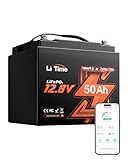 |
|
Check Latest Price |
| 5 |  |
|
Check Latest Price |
| 6 | 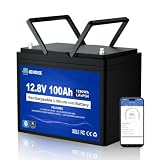 |
|
Check Latest Price |
| 7 |  |
|
Check Latest Price |
| 8 |  |
|
Check Latest Price |
| 9 |  |
|
Check Latest Price |
| 10 | 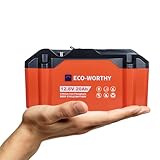 |
|
Check Latest Price |
As an Amazon Associate we earn from qualifying purchases, at no additional cost to you. CERTAIN CONTENT THAT APPEARS ON THIS SITE COMES FROM AMAZON. THIS CONTENT IS PROVIDED 'AS IS' AND IS SUBJECT TO CHANGE OR REMOVAL AT ANY TIME.
How We Picked and Scored These Batteries
Every battery here was judged on the same weighted framework: 40 percent usable energy for a real trolling motor duty cycle, 20 percent weight relative to that capacity, 15 percent cycle life and warranty, 15 percent cold-weather and charging behavior, and 10 percent monitoring and build quality.
Usable energy is the metric that matters most and the one most spec sheets hide. A 100Ah lead-acid pack realistically delivers about 50Ah before you start damaging it, so it carries roughly 640Wh of usable energy. A 100Ah LiFePO4 pack delivers closer to its full 1280Wh. That is why a 57-pound AGM and a 22-pound lithium pack with the same printed capacity are not comparable products.
We also weighted honest cons lists heavily. A battery described only by its cycle count is a marketing page, not a review, so anything with a heavy one-star share or a short return window is flagged in its section rather than buried. Disclosure: we may earn a commission on qualifying purchases, and that has no bearing on the order below.
1. LiTime 12V 100Ah LiFePO4 Trolling Motor Battery – The Best Overall Pick
Litime 12V 100Ah Trolling Motor LiFePO4 Battery for Marine, Boat, Yacht
- 1280Wh in 22.2 pounds
- 4000 cycles at 100% DOD
- Bluetooth 5.x app monitoring
- IP65 sealed enclosure
Pros
- Less than half the weight of a comparable 100Ah AGM
- Nearly full 100Ah usable so runtime roughly doubles
- Accurate state of charge and live amp draw in the app
- IP65 waterproof and salt resistant for coastal fishing
- Expandable to 4P4S for 20.48kWh systems
Cons
- Bluetooth must be activated with a lithium or MPPT charger on first use
- Partly discharged on arrival and needs a wake-up charge
- Not intended for engine starting
As an Amazon Associate we earn from qualifying purchases, at no additional cost to you. CERTAIN CONTENT THAT APPEARS ON THIS SITE COMES FROM AMAZON. THIS CONTENT IS PROVIDED 'AS IS' AND IS SUBJECT TO CHANGE OR REMOVAL AT ANY TIME.
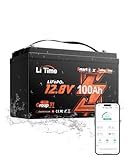
This is the pack that changed how I think about trolling batteries. It weighs 22.2 pounds and carries 1280Wh.
It fits a Group 31 footprint, so it drops into boxes built for lead-acid while removing roughly 35 pounds from the transom compared with a 57-pound AGM. Reviewers upgrading from flooded or AGM report the weight saving and the doubled usable capacity as the two decisive benefits.
It holds charge through multi-hour runs in heavy wind, which is exactly the scenario where AGM packs start to sag. Anglers running paired banks for 24V systems report all-day trolling with charge to spare, and the Bluetooth telemetry means you can see the drain rate instead of guessing.
1280Wh and 4000 Cycles at Full Depth of Discharge
The cycle rating is quoted at three different depths: 4000 cycles at 100 percent DOD, 6000 at 80 percent, and 15000 at 60 percent. That is the honest way to quote a lithium pack, and it is the advantage over every lead-acid option in this roundup, where staying above 50 percent is the rule of thumb.
At 1280Wh in 22.2 pounds, it lands around 58Wh per pound. The 63.9-pound AGM in this roundup delivers about 10Wh per pound. That gap is why the LiFePO4 pack changes draft and hand-carry logistics in a way lead-acid cannot.
Bluetooth Monitoring and the First-Charge Activation Step
The app shows state of charge, live current, and supports a discharge toggle plus system checks. It is genuinely useful for deciding when to head back to the ramp rather than pushing into shallow water with a dying bank.
The one friction point is real: Bluetooth has to be activated with a lithium or MPPT charger before it will connect. A minority of buyers also report units arriving dead and needing replacement. Both are manageable, but plan your first charge accordingly.
Built for 30-70lb Trolling Motors
It is specified for 30-70lb motors, and the enclosure is IP65 dustproof, waterproof, and salt resistant with more than 20 protection circuits covering overcharge, overheat, and short circuit. Coverage comes through AIG product liability insurance, which matters on a battery that lives in a wet compartment.
Expansion to 4P4S gives a 51.2V 400Ah or 20.48kWh system, so the same chemistry scales from a single kayak run to a full offshore bank. For most buyers the point of buying here is that the 1280Wh ceiling is rarely the limit.
As an Amazon Associate we earn from qualifying purchases, at no additional cost to you. CERTAIN CONTENT THAT APPEARS ON THIS SITE COMES FROM AMAZON. THIS CONTENT IS PROVIDED 'AS IS' AND IS SUBJECT TO CHANGE OR REMOVAL AT ANY TIME.
2. Weize 12V 100Ah AGM Deep Cycle Battery – Best for Heavy Burst Discharge
Weize Deep Cycle AGM 12 Volt 100Ah Battery, Maintenance-Free, 3% Self-Discharge Rate, 1150A Max Discharge Current, Perfect for RV, Solar, Trolling Motor, Wind, Marine, Camping and Off-Grid System
- 100Ah sealed AGM
- 57 pounds
- 1150A max discharge
- 1-3% monthly self-discharge
Pros
- Maintenance-free sealed AGM with no acid leakage
- Several hours of dependable trolling runtime per charge
- Handles subzero off-grid use better than lithium
- Low monthly self-discharge suits seasonal boats
- Consistent 4.5 rating across a very large review base
Cons
- Very heavy at 57 pounds and awkward to move into a boat
- Larger footprint than some batteries it replaces
- Seller must be contacted directly for returns
As an Amazon Associate we earn from qualifying purchases, at no additional cost to you. CERTAIN CONTENT THAT APPEARS ON THIS SITE COMES FROM AMAZON. THIS CONTENT IS PROVIDED 'AS IS' AND IS SUBJECT TO CHANGE OR REMOVAL AT ANY TIME.
This is the battery I put on a boat when the owner wants zero learning curve. It is sealed AGM, it needs no water checks, and owners report it holds up well in cold discharge. Owners running trolling motors, RV solar, and off-grid systems all report the same dependable hours-per-charge behavior.
Where it wins outright is burst current. The 1150A maximum discharge rating for five seconds covers the high-thrust surge a motor draws when you break it loose of heavy cover, something a 50A-class lithium BMS handles with more reluctance.
Why the Weight Is the Whole Argument
At 57 pounds, a second battery for a dual-bank setup is a two-person lift. On a small aluminum boat or a trailer you load solo, that is the difference between a bank you maintain and a bank you avoid. An owner on r/boatbuilding described exactly this frustration when hunting for a lighter pack for a 28lb thrust motor on a 12-foot jon boat.
Dimensions are 12.99 by 6.73 by 8.43 inches, so it can be larger than what it replaces. Measure your battery box before ordering rather than assuming a like-for-like swap.
Self-Discharge and Seasonal Boat Storage
Self-discharge runs 1-3 percent per month, and the operating window is wide: charging from 14F to 122F, discharging from 5F to 122F, with 77F called out as ideal. For a boat that sits on a lift through winter, those numbers mean you can leave it installed and top it up occasionally instead of carrying it into a climate-controlled space.
The technical caveat worth knowing: a minority of buyers report units that stop accepting charge after roughly 60 days of sitting. If you store a battery installed, put it on a maintenance charger rather than leaving it fully quiet.
What the 1-Year Warranty Signals
The one-year warranty is shorter than the Renogy AGM’s two years. It covers a product with a very large installed base and consistent feedback, and several reviewers note the seller eventually issued timely replacements, but the coverage window itself is narrow for a 57-pound item you will move several times a season.
Terminal layout is positive on the red lead and negative on the black lead, with screw terminals and included hardware. Plan your cable runs before you commit to a box arrangement.
As an Amazon Associate we earn from qualifying purchases, at no additional cost to you. CERTAIN CONTENT THAT APPEARS ON THIS SITE COMES FROM AMAZON. THIS CONTENT IS PROVIDED 'AS IS' AND IS SUBJECT TO CHANGE OR REMOVAL AT ANY TIME.
3. Mighty Max 12V 55Ah Deep Cycle Battery – Most Versatile for Small Boats
Mighty Max Battery 12V 55Ah Power Boat Pontoon Electric Trolling Motor Deep Cycle Battery
- 12V 55Ah sealed lead acid
- UL certified spill-proof design
- Mountable in any orientation
- One-year warranty
Pros
- Consistent all-day runtime on 30-46lb trolling motors
- Sealed spill-proof AGM mounts in any position
- Shock and vibration resistant for hulls and truck beds
- Performs through freezing and hot weather
- Most compact capacity in this roundup
Cons
- Heavy relative to its capacity in a small kayak
- Needs a full trickle charge before first use
- Best life when kept above roughly 25 percent depth
As an Amazon Associate we earn from qualifying purchases, at no additional cost to you. CERTAIN CONTENT THAT APPEARS ON THIS SITE COMES FROM AMAZON. THIS CONTENT IS PROVIDED 'AS IS' AND IS SUBJECT TO CHANGE OR REMOVAL AT ANY TIME.
The Mighty Max is the oldest and least complicated pick here, and for a 30-46lb motor on a jon boat or a small pontoon it is very hard to argue with. Owners consistently report four to six hours of trolling from a single charge and durability across seasons of freezing nights.
It is a sealed SLA/AGM design, UL certified, and it mounts in any orientation, which solves the awkward geometry problem in many small hulls where a Group 24 simply will not fit. At 9.06 by 5.43 by 8.98 inches, it is a compact footprint that fits boxes a Group 24 will not.
Discipline Matters More Than Chemistry at This Capacity
Reviewers are candid that this battery should not be discharged below roughly 25 percent depth for the best service life, and that the older chemistry means shorter runtime than lithium. This is the classic lead-acid trade: cheap, proven, tolerant of abuse compared to lithium, but punished hard by deep discharge.
Forum consensus on iboats and BassResource is consistent on this point. Oversize the bank rather than running it flat, keep it above 50 percent, and use a smart charger. A 55Ah pack managed that way will outlast far better chemistry managed badly.
What Ships in the Box and What Does Not
Only the battery and screws are included, with F2 terminals and no wiring harness. If you are building a new install, budget for tinned marine cable, a breaker, and connectors separately, because a flooded compartment with a loose connection is the fastest way to corrode a terminal post.
Expect to give it a full trickle charge before the first outing out of the box. The one-year manufacturer warranty is standard for the category.
Who This Battery Is Not For
It is not for anyone chasing all-day runtime from a single pack, and not for a kayak angler who is sensitive to every pound carried. Forum reports of small 35Ah AGM packs running a small motor close to three hours at medium speed are a fair expectation-setting reference for this class of battery.
If your boat already has a house bank and you only need to run a small motor for a few hours, this is the sensible pick. If you want a full day of drift fishing, step up a capacity class or change chemistry.
As an Amazon Associate we earn from qualifying purchases, at no additional cost to you. CERTAIN CONTENT THAT APPEARS ON THIS SITE COMES FROM AMAZON. THIS CONTENT IS PROVIDED 'AS IS' AND IS SUBJECT TO CHANGE OR REMOVAL AT ANY TIME.
4. LiTime 12V 50Ah LiFePO4 Trolling Motor Battery – Best for Fishing Kayaks
LiTime 12V 50Ah Trolling Motors LiFePO4 Lithium Battery for Fish Finder
- 640Wh at 11.3 pounds
- 1.2C 60A continuous discharge
- Bluetooth 5.0 with QR pairing
- IP65 enclosure
Pros
- Extremely light at 11.3 pounds for easy carry and mounting
- Bluetooth app shows state of charge while actively trolling
- Handles a 55lb Minn Kota Enduramax without trouble
- Reports of two full days of fishing with charge remaining
- Loses very little charge through months of winter storage
Cons
- Bluetooth percentage unreliable below roughly 0.5A draw
- Must be activated with a lithium or MPPT charger on first use
- Warranty resolution can mean shipping the battery back overseas
As an Amazon Associate we earn from qualifying purchases, at no additional cost to you. CERTAIN CONTENT THAT APPEARS ON THIS SITE COMES FROM AMAZON. THIS CONTENT IS PROVIDED 'AS IS' AND IS SUBJECT TO CHANGE OR REMOVAL AT ANY TIME.
This is the pack I recommend to kayak anglers, and it is the only one here that comfortably fits a bow-mounted or stern-mounted kayak rig without changing how you paddle. At 11.3 pounds and 7.68 by 6.54 by 6.77 inches, it is a true kayak battery rather than a compromise.
Reviewers report two full days of high and low speed fishing with charge remaining, and several owners have run 50Ah and 100Ah versions in kayaks for years. Multiple owners specifically mention handling a 55lb Minn Kota Enduramax without trouble.
640Wh and the Peak Discharge Question
The 1.2C rating equals 60A continuous discharge for 30 minutes, which exists specifically to cover peak thrust demands from a mid-size motor. Internal resistance is 40 milliohms, low enough to avoid the voltage sag that makes a motor feel weak under load.
For long trips, the 100Ah version in position one is the better answer, because doubling to 1280Wh costs about 11 more pounds. This 50Ah pack is the answer when weight, not hours, sets the constraint.
Bluetooth 5.0 Pairing and Its One Blind Spot
QR code pairing means no manual pairing step, which removes the most common setup complaint with app-monitored batteries. The app is accurate for a moving boat drawing real current.
The blind spot is anything under roughly 0.5A. A fish finder idling at very low draw can show a misleading percentage, so use the app for trend, not for a precise reading while you are stationary.
Cell Quality, Cutoffs, and the Case Issue
It uses EV-grade LiFePO4 cells rated 4000+ deep cycles, with a 50A BMS and a low-temperature charge cut-off, inside an IP65 waterproof enclosure. M8 terminals come with insulating caps and hardware included, which matters in a wet cockpit.
Understand the support path before you buy. Some buyers report units that would not charge on arrival, and warranty resolution can involve shipping the battery back overseas. That is a real cost in time for anyone fishing a remote lake, and it is the single strongest argument for testing the pack the day it arrives rather than at the ramp.
As an Amazon Associate we earn from qualifying purchases, at no additional cost to you. CERTAIN CONTENT THAT APPEARS ON THIS SITE COMES FROM AMAZON. THIS CONTENT IS PROVIDED 'AS IS' AND IS SUBJECT TO CHANGE OR REMOVAL AT ANY TIME.
5. BtrPower 12V 50Ah LiFePO4 Battery – Best Value Lithium for 30-50lb Motors
12V 50Ah Trolling Motor LiFePO4 Battery,5000+ Deep Cycle lithium Battery
- 12.8V 50Ah LiFePO4 at 11 pounds
- 5000+ deep cycle rating
- 50A BMS with cell balancing
Pros
- About 11 pounds
- roughly a third of an equivalent lead-acid pack
- 5000+ cycle rating far beyond any lead-acid option here
- Compact enough to fit where lead-acid units cannot
- Expansion up to 4 units in series or parallel
- Good cycle life in a lower cost bracket
Cons
- Only a one-year warranty with a three-month return window
- 50A BMS is lower than 100A alternatives
- No Bluetooth monitoring
- Recommended charge current of 10A or less means slow full charges
As an Amazon Associate we earn from qualifying purchases, at no additional cost to you. CERTAIN CONTENT THAT APPEARS ON THIS SITE COMES FROM AMAZON. THIS CONTENT IS PROVIDED 'AS IS' AND IS SUBJECT TO CHANGE OR REMOVAL AT ANY TIME.
The BtrPower is the value entry point into real deep cycle lithium, and it is the pick for anyone who wants the weight and cycle-life advantage without a premium brand name. It is specified for 30-50lb motors from Minn Kota, Newport Vessels, and PEXMOR, at 11 pounds and 5.5 by 9 by 8.3 inches.
Reviewers consistently point to the weight reduction and the long cycle life as the reasons it stands out in its capacity class. The footprint is small enough that it solves geometry problems in a shallow battery tray where a Group 24 will not go.
The 50A BMS Is the Spec That Decides Your Motor
A 50A BMS has cell balancing, overcharge, over-discharge, overcurrent, and short circuit protection, which is ample for motors in the 30-50lb class. Push it with an 80lb motor in heavy current and you have less peak headroom than a 100A pack provides, which is where the position one and position seven picks pull ahead.
For a 12.8V system rated at 30-50lb, this is comfortable. Match the BMS to the motor, not to the marketing tier.
Charging Rate and the Warranty Clock
Charge at 14.4-14.6V with a recommended current of 10A or less. That is the trade for the low cost: a full charge takes considerably longer than it does on a 100A-pack with a 20A charger, so plan an overnight charge on a multi-day trip rather than a lunch-hour top-up.
The one-year warranty with a three-month return window is the sharpest edge in this roundup. Expansion runs up to four batteries in series or parallel, and the pack is solar charging compatible, but test it early.
When the 20Ah or 50Ah Class Is the Right Answer
Below about 50Ah, the conversation changes. At 20Ah you are powering electronics and short low-thrust runs. At 50Ah you have a working all-day battery for a small motor on a manageable boat. Those are the two capacity tiers most anglers actually need.
Forum advice from long-time boaters lands on the same point: sizing and charging discipline matter more than brand. A correctly sized 50Ah lithium pack beats an oversized AGM that gets flattened every trip.
As an Amazon Associate we earn from qualifying purchases, at no additional cost to you. CERTAIN CONTENT THAT APPEARS ON THIS SITE COMES FROM AMAZON. THIS CONTENT IS PROVIDED 'AS IS' AND IS SUBJECT TO CHANGE OR REMOVAL AT ANY TIME.
6. DC HOUSE 12V 100Ah Bluetooth LiFePO4 Battery – Best for App Monitoring Detail
DC HOUSE 12V 100Ah Bluetooth LiFePO4 Trolling Motor Lithium Battery
- Cell-level app monitoring
- 100Ah at 23.8 pounds
- Near Group 24 footprint
- UL certified cells
Pros
- Only app in this roundup reporting cell-level SOC
- voltage and current
- Fault display page plus push alerts on failures
- Near Group 24 form factor fits standard marine boxes
- Low-temperature cut-offs protect cells in cold conditions
- UL and UN38.3 certified Class A cells
Cons
- Roughly 0.32 inches taller than a standard Group 24
- Three-year warranty is short for a lithium pack
- 4P4S expansion not supported
- Not designed for engine starting
As an Amazon Associate we earn from qualifying purchases, at no additional cost to you. CERTAIN CONTENT THAT APPEARS ON THIS SITE COMES FROM AMAZON. THIS CONTENT IS PROVIDED 'AS IS' AND IS SUBJECT TO CHANGE OR REMOVAL AT ANY TIME.
The DC HOUSE is the pick if you want to know the health of every cell rather than a single blended number. The app reports cell-level state of charge, voltage, and current over Bluetooth 5.1 with a 5-10 meter range, plus a dedicated fault display page.
It weighs 23.8 pounds for 100Ah, so it sits in the same weight class as the other big lithium packs here, and it is built around UL and UN38.3 certified Class A LiFePO4 cells with a 100A BMS.
Fitment Is the Whole Question for This Battery
Dimensions are 6.6 by 10.2 by 9.2 inches, an approximate BCI Group 24 that runs about 0.32 inches taller than standard. In a tight Group 24 box with a low lid, that three-tenths of an inch is the difference between an install and a return trip to the hardware store.
Measure the box height with the lid fully seated, not with the tray empty. That single step avoids the most common complaint in this battery’s reviews.
Low-Temperature Cutoffs and Cycle Claims
Charging cuts off below 19.4F, discharging below -4F, and auto-resumes at 32F. Those thresholds are on the conservative side compared with packs that refuse to charge until above 32F, so it accepts a charge on more winter mornings than most of the lithium options here.
The company claims up to 15,000 cycles and a 10-year service life. Treat that as a marketing ceiling rather than a planning figure. The realistic planning number comes from the chemistry: EV-grade LiFePO4 cells rated around 4000 full cycles, and far more if you stay near 60 percent depth of discharge.
Expansion Limits and the Three-Year Commitment
Expansion runs up to 4 in series or 4 in parallel, 8 batteries maximum, with 4P4S explicitly not allowed. If your growth plan is a 36V or 48V whole-boat bank, pick a pack that supports the full topology instead.
It also requires a dedicated lithium battery charger. The manufacturer backs it with a three-year service commitment, which is shorter than the five-year coverage on several picks in this roundup.
As an Amazon Associate we earn from qualifying purchases, at no additional cost to you. CERTAIN CONTENT THAT APPEARS ON THIS SITE COMES FROM AMAZON. THIS CONTENT IS PROVIDED 'AS IS' AND IS SUBJECT TO CHANGE OR REMOVAL AT ANY TIME.
7. SUPER EMPOWER 12V 100Ah LiFePO4 Group 24 Battery – Best Lightweight 100Ah
12V 100Ah LiFePO4 Battery, Group 24 Deep Cycle for RVs & Trolling Motors
- 1280Wh at 21.6 pounds
- BCI Group 24 drop-in
- 100A BMS with cell balancing
- Five-year warranty
Pros
- Lightest 100Ah option by measured weight at 21.6 pounds
- True drop-in Group 24 dimensions for standard battery boxes
- 100A BMS with cell balancing and temperature management
- Expands to 4S4P for a 20.48kWh system
- M8 terminals match common marine and RV hardware
Cons
- Charging is disabled below 32F and needs winter planning
- No Bluetooth monitoring on this model
- Not suitable for engine starting or cranking
As an Amazon Associate we earn from qualifying purchases, at no additional cost to you. CERTAIN CONTENT THAT APPEARS ON THIS SITE COMES FROM AMAZON. THIS CONTENT IS PROVIDED 'AS IS' AND IS SUBJECT TO CHANGE OR REMOVAL AT ANY TIME.
Carrying 1280Wh in 21.6 pounds, this pack fits a genuine BCI Group 24 footprint at 6.49 by 10.24 by 8.98 inches. That combination is rare, and it is why this is the cleanest lead-acid swap on the list.
Reviewers treat it as a drop-in replacement in RV and marine installs, and the 21.6-pound weight with a five-year warranty is the pair of details they mention most. Around 84 percent of its ratings are five stars.
Charging Options Are Unusually Flexible
This pack accepts three professional charging paths: a 14.4-14.6V LiFePO4 charger, an MPPT or PWM solar controller set to lithium mode, or a DC-DC charger. For multi-day trips that is the difference between planning around the boat’s cigarette lighter and actually running a panel.
Internal resistance is 40 milliohms and the pack uses Grade A LiFePO4 cells with a 100A BMS handling cell balancing and temperature management.
The 32F Charging Lockout, Explained
Charging pauses below 32F, discharging stops at -4F, and charging resumes above 41F. The lockout exists because charging a lithium cell below freezing plates lithium metal inside it, which is a permanent capacity loss rather than a temporary inconvenience.
The workaround owners use is simple. Warm the battery at home before you leave, and if it is frozen at the ramp, run the motor for a while to warm the pack or use a heated battery bag. This is the normal winter behavior of this chemistry, not a defect.
Expansion and the No-Starting-Caveat
It expands to 4S4P for 51.2V 400Ah or 20.48kWh, so it covers the same growth path as the larger packs in this roundup. Support responds within 24 hours per the manufacturer, with a five-year warranty behind it.
Like most packs here, it is energy storage only and not for engine starting. If your plan is a dual system where one battery also starts the outboard, keep a separate AGM on reserve.
As an Amazon Associate we earn from qualifying purchases, at no additional cost to you. CERTAIN CONTENT THAT APPEARS ON THIS SITE COMES FROM AMAZON. THIS CONTENT IS PROVIDED 'AS IS' AND IS SUBJECT TO CHANGE OR REMOVAL AT ANY TIME.
8. VEMDIA 12V 100Ah LiFePO4 Group 31 Battery – Best for Exact Group 31 Boxes
12V 100Ah LiFePO4 Lithium Battery Group 31 Deep Cycle for RV Trolling Motor
- 1280Wh at 24 pounds
- Exact Group 31 drop-in
- 100A smart BMS
- Fast 5-hour full charge
Pros
- Precise drop-in fit for BCI Group 31 battery boxes
- About 70 percent lighter than a comparable lead-acid pack
- Full charge in about 5 hours with a 20A LiFePO4 charger
- 100A smart BMS with automatic low-temperature cut-off
- Discharge range from -4F to 140F
Cons
- Weakest average rating here at 4.3 with a 12 percent one-star share
- Only a two-year manufacturer warranty
- No Bluetooth or app monitoring
As an Amazon Associate we earn from qualifying purchases, at no additional cost to you. CERTAIN CONTENT THAT APPEARS ON THIS SITE COMES FROM AMAZON. THIS CONTENT IS PROVIDED 'AS IS' AND IS SUBJECT TO CHANGE OR REMOVAL AT ANY TIME.
If your battery box is a Group 31 and you want an exact fit, this is the pick. At 12.9 by 6.6 by 8.5 inches and 24 pounds, it lands at true Group 31 dimensions rather than approximating a group size, which removes the clearance guesswork entirely.
The headline claim is speed: full charge in about five hours with a 14.6V 20A LiFePO4 charger, which is the quickest turnaround documented in this roundup and the most useful spec for a boat shared between two anglers on different days.
Cycle Numbers Across Three Depths of Discharge
The published figures are 15000+ cycles at 60 percent DOD, 8000+ at 80 percent, and 6000 at 100 percent. Those numbers assume proper charging and a matched charger, and they are why the battery still has useful life even if you run it hard on a full-day trip.
Resistance is 120 milliohms, higher than the 40 milliohms packs elsewhere in this roundup, which makes it a little less eager under high burst load. For a Group 31 box in a mid-size boat at moderate thrust, that difference will not register.
Why the Rating Is Lowest Here
This pick carries the weakest average rating in the group at 4.3, with a 12 percent one-star share, alongside some reports of initial quality inconsistency. We list it because the Group 31 fit and five-hour charging are genuinely unmatched here, and because the specifications are strong for the money.
It also has no Bluetooth or app monitoring, so you will be estimating state of charge by eye and multimeter rather than a phone. Add a two-year warranty to that and the fairest description is a spec-sheet bargain with a thinner support cushion.
Who This Battery Fits Best
It suits a boat with a Group 31 tray, a 12.8V system, and a preference for fast overnight turnarounds over telemetry. Expansion to 4S4P for 51.2V 400Ah or 20.48kWh is supported, so a 36V build is still on the table.
Support is US-based with a 24-hour response guarantee. Given the two-year window, testing the pack thoroughly in the first weeks is the sensible move.
As an Amazon Associate we earn from qualifying purchases, at no additional cost to you. CERTAIN CONTENT THAT APPEARS ON THIS SITE COMES FROM AMAZON. THIS CONTENT IS PROVIDED 'AS IS' AND IS SUBJECT TO CHANGE OR REMOVAL AT ANY TIME.
9. Renogy 12V 100Ah Deep Cycle AGM Battery – Best for RV and House Banks
Renogy 12 Volt 100Ah Deep Cycle AGM Battery, Lead Acid Solar Battery
- 12V 100Ah sealed AGM at 63.9 pounds
- Discharge -4F to 140F
- Under 3 percent monthly self-discharge
Pros
- Well-established brand with thousands of ratings
- Sealed AGM with no acid spill and no internal servicing
- Strong low-temperature discharge down to -4F
- Low self-discharge suits long seasonal storage
- Series connection unlimited and parallel up to 4P
Cons
- Heaviest pack here by measured weight
- at nearly 64 pounds
- Only about half the rated capacity is practically usable
- No battery monitoring or Bluetooth connectivity
As an Amazon Associate we earn from qualifying purchases, at no additional cost to you. CERTAIN CONTENT THAT APPEARS ON THIS SITE COMES FROM AMAZON. THIS CONTENT IS PROVIDED 'AS IS' AND IS SUBJECT TO CHANGE OR REMOVAL AT ANY TIME.
The Renogy is the choice when the battery does more than run a motor. It is a 100Ah sealed AGM with 63.9-pound weight, sold for RV, solar, marine, and off-grid duty, and it carries more than 3500 ratings, giving you a deep pool of owner feedback to draw on.
Owners trust it for house banks because it needs no maintenance and no internal troubleshooting, and because the upgraded electrolyte formula holds up from -4F to 140F. Self-discharge stays below 3 percent per month at 77F.
The Usable-Capacity Reality of 100Ah AGM
This is the number to internalize: roughly half of the printed 100Ah is usable without damaging the pack, so plan on about 50Ah of working capacity. Against a motor running at 25A on medium, that is about two hours before you should be heading back.
The 1100A maximum discharge for five seconds handles burst load, and the cycle life is shorter than any LiFePO4 option here. It is a bank you fill and refill within a narrow window rather than one you draw down.
Weight and the House-Bank Reality
At 63.9 pounds it is one of the two heaviest units in this roundup. If it is powering a trolling motor alone, that weight buys you very little. If it is powering a house bank that also charges solar and runs an inverter, the trade is entirely different.
Series connection is unlimited and parallel runs up to 4P, so building out a larger bank is straightforward. Keep an eye on the fact that terminal hardware is not always included in the box.
Warranty, Brand, and Forum Longevity
The two-year prorated material and workmanship warranty is longer than most picks in this roundup, and the brand has been in this market long enough that owner longevity data exists. On the iboats deep cycle thread, owners with multi-decade ownership histories consistently point at established brands with real service networks over off-brand packs, and describe a clear pattern: expect several years from a well-treated AGM and far longer when discharge discipline is followed.
The same forum discussion raises a caution that applies to the entire category, and to the two AGM picks in this roundup specifically. Some manufacturers have quietly shifted from true deep cycle plate construction toward dual purpose labeling, so verify the amp-hour and cycle claims rather than trusting the category name on the box.
As an Amazon Associate we earn from qualifying purchases, at no additional cost to you. CERTAIN CONTENT THAT APPEARS ON THIS SITE COMES FROM AMAZON. THIS CONTENT IS PROVIDED 'AS IS' AND IS SUBJECT TO CHANGE OR REMOVAL AT ANY TIME.
10. ECO-WORTHY 12V 20Ah Portable LiFePO4 Battery – Best for Fish Finders and Light Duty
ECO-WORTHY Portable 12V Lithium Battery, 12.8V 20Ah Lithium Iron Phosphate DEEP CYCLE BATTERY, Built-in BMS, 4000+ Cycles, Perfect for Outdoor Camping Fishing RV Marine Trolling Motor Fishfinder
- 12.8V 20Ah LiFePO4 at 5.4 pounds
- Bluetooth 5.1 monitoring
- 20A BMS
- Three-year warranty
Pros
- Only 5.4 pounds with an ergonomic carry grip
- Compact enough for kayaks
- traps
- and portable electronics
- Bluetooth 5.1 app shows voltage
- current and remaining capacity
- 5000+ cycle life far outlasts typical lead-acid
- Low-temp cut-offs protect cells in cold weather
Cons
- 20Ah is small and best for electronics and light duty
- DC output port is limited to 5A to avoid heat buildup
- 5.5x2.5mm adapter wiring is not included
- Not sized to run larger trolling motors for a full day
As an Amazon Associate we earn from qualifying purchases, at no additional cost to you. CERTAIN CONTENT THAT APPEARS ON THIS SITE COMES FROM AMAZON. THIS CONTENT IS PROVIDED 'AS IS' AND IS SUBJECT TO CHANGE OR REMOVAL AT ANY TIME.
This is the smallest pack here and the one that answers a question most roundups ignore: what battery runs a fish finder, a plotter, and a couple of lights for an entire trip without a second battery box? At 5.4 pounds and 8.70 by 4.45 by 4.61 inches, this is it.
It carries a Bluetooth 5.1 app reporting voltage, current, and capacity, a 20A BMS with cell balancing, and a claimed 5000+ deep cycles with a 10-year lifespan. The three-year warranty exceeds what several larger packs in this roundup offer.
Where 20Ah Is the Right Capacity
Treat 20Ah as an electronics battery, not a motor battery. A pack this size will run a fish finder, a lighting load, and a USB device indefinitely, and it will move a low-thrust motor around a small pond for a short session. It will not run a mid-size motor for a full day.
That distinction matters because it is the correct buy for a lot of anglers. If you already have a bank for the motor, this becomes your second battery for electronics, which is exactly where a dual battery selector setup earns its keep.
The 5A DC Port and the Cold Cutoffs
There is a 5A DC output port using a 5.5 by 2.5mm connector alongside the M5 screw terminals, capped at 5A to avoid heat buildup. Adapter wiring is not included, so add the right cable before the trip.
Cold behavior is well defined: charging stops below 20F, discharging below -4F, and resumes at 32F. Those thresholds are among the more permissive in the roundup, which makes it a good shoulder-season electronics battery.
Perfect Multiplier, Poor Standalone
Because it holds 12.8V with a proper BMS, several of these can be run in parallel to build a bank, and it doubles as a shore-power-backed house battery for an RV or a small boat. Many owners use it for camping and portable power as much as for marine work.
The honest bottom line is that this pack does a narrow job extremely well. Buy it for electronics, buy the 50Ah or 100Ah packs for the motor, and you have covered a whole boat properly.
As an Amazon Associate we earn from qualifying purchases, at no additional cost to you. CERTAIN CONTENT THAT APPEARS ON THIS SITE COMES FROM AMAZON. THIS CONTENT IS PROVIDED 'AS IS' AND IS SUBJECT TO CHANGE OR REMOVAL AT ANY TIME.
How to Choose a Deep Cycle Battery for a Trolling Motor
The chemistry decision and the capacity decision are separate, and buyers who get one right and the other wrong end up unhappy. Work through them in order.
1. What Actually Makes a Battery Deep Cycle
A deep cycle battery uses thicker plates and a different active material mix so it can deliver a slow, sustained current for hours and be deeply recharged many times. A cranking battery does the opposite: it delivers a huge burst for seconds and sits unused. Cold cranking amps on a label tell you nothing about trolling motor suitability.
Members on the iboats deep cycle thread raise a legitimate concern that has grown over the past few years: some manufacturers have quietly moved from true deep cycle construction toward dual purpose labels that blur the line. Check the published cycle life and amp-hour rating rather than trusting the category name alone.
2. Runtime Math and the 50 Percent Rule
Divide the motor’s amp draw at your typical speed into usable capacity. A 100Ah LiFePO4 pack gives you close to 100Ah usable, so a motor pulling 25A gets roughly four hours. The same 100Ah AGM gives you about 50Ah usable, so two hours. That is the entire lithium argument in one line of arithmetic.
For planning, size by thrust class rather than by hope. A 30 to 40lb motor on medium speed typically draws in the low teens of amps. A 55lb motor at higher speed can pull 30-50A. An 80lb motor in heavy current will demand a 100A-class BMS, which is exactly where the 50A packs in this roundup stop being the right answer.
The corollary advice from long-time boaters is to oversize rather than run a bank deeply down. Depth of discharge discipline is the biggest single factor in how long any of these batteries last.
3. AGM vs LiFePO4 vs Flooded Lead-Acid
LiFePO4 wins on weight, usable capacity, cycle life, and self-discharge. It loses on cold charging, requires a dedicated lithium charger, and costs more up front. AGM is the middle ground: sealed, maintenance-free, tolerant of cold discharge, familiar chargers, and roughly half the usable capacity at well over twice the weight.
Flooded lead-acid is not on this list, and that is deliberate. It needs water checks, venting, and secure mounting with containment, which is a poor fit for most small boats today. If you already own a flooded bank and it has been maintained, keep it, because a well-kept flooded battery is still cheap capacity.
4. 12V, 24V, and 36V Bank Configuration
Most trolling motors run 12V, 24V, or 36V. A 12V motor takes one pack. A 24V motor takes two in series, which doubles voltage but not amp-hour capacity. A 36V motor takes three in series. In every case, series increases voltage and the amp-hour rating stays equal to the smallest battery in the string.
Check expansion topology before buying, because it varies. Several packs here support the full 4S4P path for 51.2V 400Ah or 20.48kWh systems, while the DC HOUSE explicitly does not support 4P4S. Match your growth plan to the manual, not to the marketing claim.
5. Group Size and Physical Fit
Group 24, 27, 29, and 31 are physical size codes, not chemistry or quality grades. A Group 31 is simply larger than a Group 24. Two lithium packs here approximate a Group 24 and Group 31, one hits exact Group 31 dimensions, and one runs about 0.32 inches taller than standard.
Measure your box with the lid fully closed and check terminal clearance and hold-down brackets. If you are replacing an old flooded battery, the lithium pack is frequently the size that finally fits the space you have.
6. Dual Battery, Selector Switch, and ACR
The most common advice across iboats, r/boating, and BassResource is to separate the house bank from the trolling bank with a battery selector switch and an automatic charging relay. A selector switch lets you choose which bank is connected so you can never flatten the starting battery trolling at 3% charge. The ACR connects both banks to the alternator while the engine runs and disconnects them when it stops.
For an angler with a house bank for electronics and a separate pack for the motor, this is the single highest-value addition to a boat. It is also why the 20Ah electronics pack in position ten is a genuinely useful companion rather than an afterthought.
7. Charging, Storage, and Cold-Weather Care
Lithium needs a dedicated charger with a 14.4-14.6V constant current and constant voltage profile. Running a lead-acid charger on a lithium pack is a common forum mistake and it will not charge the battery properly. If you go multi-day, an MPPT solar controller in lithium mode is the cleanest addition.
For winter storage, forum consensus is the same across chemistries: never store a lead-acid below 50 percent, use a maintenance charger, check flooded water levels, clean the terminals, and top up lithium monthly rather than leaving it silent for months. Several packs here self-discharge at 1-3 percent per month, which is fast enough to matter over a full winter.
If a lithium pack refuses to charge below 32F, that is the protection circuit working correctly. Warm it before charging, and never force charge into a frozen pack.
8. How Much to Spend by Tier
Three tiers cover almost everyone. The budget tier is a 50Ah lead-acid or 50Ah lithium pack for a small motor, short days, or electronics-only duty. The middle tier is a 100Ah lithium pack at roughly 22-24 pounds, which is the best balance of runtime, weight, and price for most full-size boats. The premium tier is a monitored 100Ah pack with Bluetooth telemetry and a five-year warranty, which pays for itself in the diagnostic information rather than the power.
Where you spend should track where your failures happen. If weight is the constraint, lithium is worth every dollar. If the budget is the constraint and your motor is small, an AGM pack is not a compromise. If you run electronics off the same bank, a monitoring feature becomes the most valuable thing you can buy.
Frequently Asked Questions About Deep Cycle Batteries
What is the best deep cycle marine battery for a trolling motor?
The best deep cycle marine battery for most anglers is a 12V 100Ah LiFePO4 pack with a 100A-class BMS. It delivers 1280Wh at roughly 22 pounds, keeps nearly all of its rated capacity usable, and adds Bluetooth monitoring. Choose a sealed AGM instead only if you need cold-weather discharge tolerance or a lower upfront cost.
How long will a 100Ah battery run a 55lb trolling motor?
On a 100Ah LiFePO4 pack, expect roughly 3 to 5 hours depending on speed and current, because nearly the full 100Ah is usable. The same 100Ah sealed AGM gives you about 50Ah of working capacity, so roughly 1.5 to 2.5 hours. Measure your motor’s actual draw at your cruising speed for a real number.
Which battery is better for a trolling motor, lithium or AGM?
Lithium is better if weight, usable capacity, and cycle life matter most, since a 100Ah LiFePO4 pack weighs about 22 pounds versus 57 to 64 pounds for AGM and holds far more usable charge. AGM is better if your budget is fixed, you fish in freezing conditions, and you already own a lead-acid charger.
Do lithium batteries damage trolling motors?
No evidence suggests a properly sized LiFePO4 pack damages a trolling motor. The recurring concern on fishing forums is about warranty terms rather than electrical damage. The real risks are mischarging with a lead-acid charger and charging a frozen pack, both of which damage the battery rather than the motor.
Do LiFePO4 trolling motor batteries need a special charger?
Yes. Use a charger with a 14.4-14.6V lithium profile, or an MPPT solar controller set to lithium mode. A standard lead-acid charger will not charge a LiFePO4 pack properly. Many packs also need a lithium or MPPT charge on first use to activate Bluetooth before the app will connect.
What group size battery fits my trolling motor battery box?
Group 24, 27, 29, and 31 are physical size codes, so measure your box with the lid fully seated and compare width, length, and height before ordering. Many lithium packs are built to Group 24 or Group 31 dimensions at half the weight, and one is about 0.32 inches taller than a standard Group 24.
Final Verdict
If you want the single best deep cycle battery for a trolling motor in 2026, the LiTime 12V 100Ah LiFePO4 in position one is the answer: 1280Wh, 22.2 pounds, Bluetooth monitoring, and the highest rating in this group.
If you need serious burst current and dislike charging rules, take the Weize 100Ah AGM. If you are on a strict budget with a 30-46lb motor, the Mighty Max 55Ah does the job for years. For a kayak, the LiTime 50Ah at 11.3 pounds is the fit. For electronics only, the 20Ah pack covers it.
Whichever one you choose, buy the lithium charger, keep a second bank behind a selector switch and an ACR, and never run a lead-acid pack below 50 percent. Those three habits decide how long the battery lasts far more than the badge on the box.