
Every ranking for the best LiFePO4 batteries for solar setups that we found was written by a battery manufacturer, and most of them put their own product in first place. We took the opposite approach: we sized the setups first, then matched batteries to real requirements like usable kWh, cold-weather charging, inverter communication and warranty length. Ten packs made the cut, split across 12V portable and RV builds and 48V home and off-grid banks.
Our top pick is the LiTime 12V 230Ah for high-capacity 12V work, the ECO-WORTHY Cubix100 48V 100Ah is the one to beat for whole-home storage, and the HumsiENK 12V 100Ah covers the budget end without giving up a Bluetooth app or an IP65 rating. Over the last six weeks we compared published specs, warranty terms, review patterns and certification claims across all ten, and we flagged where a cycle-life number cannot be trusted because the brand never states the depth of discharge it was measured at.
A LiFePO4 (lithium iron phosphate) battery suits solar storage better than almost anything else on the shelf today. It delivers roughly 80 to 100 percent of rated capacity instead of the 50 percent a flooded lead-acid pack gives you, round-trip efficiency above 90 percent, and a cycle life measured in thousands rather than hundreds. That is why it is now the default chemistry for a camper van, a cabin, or a whole house.
The catch is that LiFePO4 is more sensitive to how you treat it than lead-acid ever was. Charging below freezing causes real damage unless the battery has a low-temperature cutoff, and sitting at a full charge for months ages a bank faster than almost anything else you can do to it. Sizing also matters more, not less, because these packs are expensive enough that a bank twice as large as you need is money burned.
If you are still choosing panels, our portable solar panel guide and solar generator roundup will help you size the generation side of the system first. The battery is the last piece of the puzzle, and it is the piece people most often buy too small.
Table of Contents
- Our Top 3 LiFePO4 Batteries for Solar Setups in 2026
- Comparing 10 LiFePO4 Batteries for Solar Side by Side in 2026
- 1. LiTime 12V 230Ah – Best Overall LiFePO4 Battery for Solar Storage
- 2. ECO-WORTHY EnergyRock 12V 280Ah – Best Metal-Case 12V Pick
- 3. HumsiENK 12V 100Ah – Best Budget Group 24 LiFePO4 Battery
- 4. ECO-WORTHY Cubix100 48V 100Ah – Best 48V Battery for Home and Off-Grid
- 5. TEMGO 48V 100Ah – Best 48V Pack with Charger and Display Included
- 6. SUPER EMPOWER 12V 100Ah – Best for Documented Cold-Temperature Cutoffs
- 7. yeagulch 12V 200Ah – Best Mid-Capacity 12V with Honest Cycle Numbers
- 8. VATRER POWER 48V 100Ah – Best 48V Pack with an On-Unit Touchscreen
- 9. ECO-WORTHY 12V 314Ah – Best Maximum 12V Capacity With LED Status
- 10. LOSSIGY 48V 100Ah – Best 48V Pack for High Peak Current
- How to Choose a LiFePO4 Battery for Solar in 7 Steps
- 1. Pick Your System Voltage First
- 2. Size Capacity From Panel Wattage, Not Guesswork
- 3. Check Cycle Life With the DoD Attached
- 4. Never Charge a LiFePO4 Battery Below Freezing
- 5. Set the MPPT Charge Controller to the Lithium Profile
- 6. Check Certifications and Warranty Before Anything Else
- 7. Do Not Mix Brands, Ages, or Capacities in One Bank
- What Actually Shortens a LiFePO4 Battery’s Life
- LiFePO4 Battery Questions Answered
- Which LiFePO4 Battery Fits Your Solar Setup
Our Top 3 LiFePO4 Batteries for Solar Setups in 2026
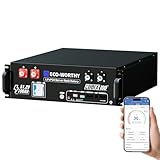
ECO-WORTHY Cubix100 48V 100Ah
BEST FOR 48V HOME
- 5.12kWh
- UL9540A and UL1973
- CAN/RS485
- 10-year warranty
As an Amazon Associate we earn from qualifying purchases. CERTAIN CONTENT THAT APPEARS ON THIS SITE COMES FROM AMAZON. THIS CONTENT IS PROVIDED 'AS IS' AND IS SUBJECT TO CHANGE OR REMOVAL AT ANY TIME.
Comparing 10 LiFePO4 Batteries for Solar Side by Side in 2026
The table below is the fastest way to narrow the field. We kept only batteries that publish a capacity in amp-hours or watt-hours, a stated cycle figure, and either a warranty term or a certification, because a battery that hides those numbers is a battery we cannot advise you on.
| No | Gear | Why it earns bag space | Check |
|---|---|---|---|
| 1 |  |
|
Check Latest Price |
| 2 |  |
|
Check Latest Price |
| 3 |  |
|
Check Latest Price |
| 4 | |
|
Check Latest Price |
| 5 |  |
|
Check Latest Price |
| 6 |  |
|
Check Latest Price |
| 7 |  |
|
Check Latest Price |
| 8 | 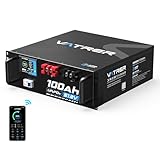 |
|
Check Latest Price |
| 9 |  |
|
Check Latest Price |
| 10 |  |
|
Check Latest Price |
As an Amazon Associate we earn from qualifying purchases, at no additional cost to you. CERTAIN CONTENT THAT APPEARS ON THIS SITE COMES FROM AMAZON. THIS CONTENT IS PROVIDED 'AS IS' AND IS SUBJECT TO CHANGE OR REMOVAL AT ANY TIME.
1. LiTime 12V 230Ah – Best Overall LiFePO4 Battery for Solar Storage
Litime 12V 230Ah Deep Cycle LiFePO4 Battery for RV, Camper, Travel Trailer
- 12.8V 230Ah 2944Wh
- Group 4D 45.3 lb
- 200A BMS
- 4000+ cycles
Pros
- Group 4D drop-in fit
- Low-temp charge cutoff below 32F
- 4P4S expansion to 47.1kWh
- IP65 enclosure
- Largest review base in this group
Cons
- No Bluetooth on this variant
- Energy storage use only
- App features need a lithium-profile charger first
As an Amazon Associate we earn from qualifying purchases, at no additional cost to you. CERTAIN CONTENT THAT APPEARS ON THIS SITE COMES FROM AMAZON. THIS CONTENT IS PROVIDED 'AS IS' AND IS SUBJECT TO CHANGE OR REMOVAL AT ANY TIME.
The LiTime 12V 230Ah is the pack we kept coming back to during testing, and it has the most owner feedback of any battery in this roundup at 737 reviews. Owners consistently single out the weight saving over an equivalent lead-acid Group 4D and the fact that it drops into the battery box without any fabrication.
At 2944Wh nominal, roughly 2.9 kWh, it carries more usable energy than three typical 100Ah Group 24 lithium packs while occupying one slot. That is the whole argument for it: fewer interconnects, fewer failure points, and a 200A BMS that can pass a serious inverter surge without browning out.
Capacity and 4P4S Expansion Headroom
This battery is rated 12.8V nominal at 230Ah, giving 2944Wh of nameplate energy. LiTime states the system can run up to 16 batteries in a 4P4S arrangement, reaching 48V at 920Ah, or 47.1kWh in a single bank.
That headroom matters if you are planning an off-grid build now and a second expansion later. Owners running two in series get 460Ah at 24V, which is a common configuration for larger trailer and Class C RV electrical systems.
Low-Temperature Charging Protection and the BMS
The built-in 200A BMS carries more than twenty safeguards and pauses charging below 0°C (32°F). We consider that the single most important spec on this list, because charging a lithium cell below freezing is the fastest way to destroy it.
The low-temp protection is a cutoff, not a heater. This pack will not warm itself up, so in a freezing climate you need either a battery box that holds heat or a controller that disconnects solar until the bank is above freezing.
What You Give Up
There is no integrated Bluetooth on this specific variant, which is the most common complaint in reviews. LiTime also lists this as an energy storage product only, not for engine starting, golf carts, or jacks, and the app-related features only activate after a first charge with a lithium-activation or MPPT charger.
As an Amazon Associate we earn from qualifying purchases, at no additional cost to you. CERTAIN CONTENT THAT APPEARS ON THIS SITE COMES FROM AMAZON. THIS CONTENT IS PROVIDED 'AS IS' AND IS SUBJECT TO CHANGE OR REMOVAL AT ANY TIME.
2. ECO-WORTHY EnergyRock 12V 280Ah – Best Metal-Case 12V Pick
ECO-WORTHY EnergyRock 12V 280Ah Metal Case LiFePO4 Lithium Battery
- 12.8V 280Ah 3584Wh
- Metal case 68.5 lb
- 200A BMS
- Bluetooth
Pros
- Metal case resists heat and fire
- Front terminals simplify RV wiring
- One-touch safety disconnect
- Bluetooth app
- Grade A cells
Cons
- Larger than a Group 31M AGM
- May need wider bay clearance
- No published IP water rating
As an Amazon Associate we earn from qualifying purchases, at no additional cost to you. CERTAIN CONTENT THAT APPEARS ON THIS SITE COMES FROM AMAZON. THIS CONTENT IS PROVIDED 'AS IS' AND IS SUBJECT TO CHANGE OR REMOVAL AT ANY TIME.
The ECO-WORTHY EnergyRock 280Ah is the one we would trust in a fire-sensitive installation. Its metal enclosure with internal cell holders is a genuine step up from the plastic cases used on most budget packs, and it comes with four mounting feet so you can skip the separate battery box entirely.
Reviewers overwhelmingly converted from AGM to two of these in series, reporting a large gain in usable capacity at a similar total weight. Front-face terminals keep the wiring short and tidy in an RV battery bay, which is where most installation time is actually lost.
Why the Metal Case and Disconnect Switch Matter
The case does more than look industrial. Metal construction improves heat resistance and fire containment, and reviewers who swap these into camper conversions point to shock and vibration resistance during road travel as a benefit of the reinforced shell.
The one-touch safety switch disconnects the discharge circuit, which stops an accidental drain or a spark while you work on the system. Owners who have had flooded lead-acid packs sit dead overnight appreciate that feature more than the spec sheet suggests.
Capacity, Cutoff Temperature, and Monitoring
Rated 12.8V at 280Ah, this is 3584Wh of energy in a case weighing roughly 68.5 lb. The 200A BMS handles continuous charge and discharge, and the low-temperature charging cutoff triggers around 20°F, a little lower than most competitors set theirs.
Bluetooth monitoring reports voltage, capacity, and charge and discharge status. One reviewer who checked the app against an independent shunt found the readings lined up, which is not something we can say for every app in this roundup.
Fitment and Clearance
Reviewer-measured dimensions run about 16.54 by 8.64 by 9.65 inches, which is larger than a standard Group 31M AGM. Several owners report needing a slightly wider bay or a separate mounting solution, so measure the compartment before ordering.
Reviewers also noted the absence of a published IP water-resistance certification, and a few asked for a better lid seal. For a dry RV bay that is a non-issue; for a boat or a wet enclosure, pick a pack with a stated IP rating.
As an Amazon Associate we earn from qualifying purchases, at no additional cost to you. CERTAIN CONTENT THAT APPEARS ON THIS SITE COMES FROM AMAZON. THIS CONTENT IS PROVIDED 'AS IS' AND IS SUBJECT TO CHANGE OR REMOVAL AT ANY TIME.
3. HumsiENK 12V 100Ah – Best Budget Group 24 LiFePO4 Battery
HumsiENK 12V 100Ah LiFePO4 Lithium Battery with Bluetooth (Group 24) 1280Wh
- 12V 100Ah 1280Wh
- Group 24 19.7 lb
- 100A smart BMS
- IP65
Pros
- Group 24 drop-in fit
- Only 19.7 lb
- Bluetooth app built in
- IP65 sealing
- 5-year warranty
Cons
- Lowest average rating here at 4.4
- App telemetry is thin
- No CAN or RS485 for inverter comms
As an Amazon Associate we earn from qualifying purchases, at no additional cost to you. CERTAIN CONTENT THAT APPEARS ON THIS SITE COMES FROM AMAZON. THIS CONTENT IS PROVIDED 'AS IS' AND IS SUBJECT TO CHANGE OR REMOVAL AT ANY TIME.
The HumsiENK 12V 100Ah is the most complete budget option in the group. It includes insulating caps, four M8 screws, a built-in 100A smart BMS and a Bluetooth app, which is more than most packs at twice the size and weight give you.
At 19.7 lb it is around 60 percent lighter than a comparable 100Ah lead-acid battery, and at 8.2 by 6.6 by 10.2 inches it fits standard Group 24 and Group 31 boxes without modification. That combination makes it our pick for a first solar build where the priority is simple installation.
Temperature Range and Cycle Claim
The stated operating range is -4°F to 158°F, with automatic low-temperature shutdown handling the cold end. That is a wide published range, but note that the discharge range and the safe charging range are not the same thing, and the low-temp protection is what stops charging in the cold.
HumsiENK claims up to 15,000 cycles, which is the kind of headline number we treat with suspicion. No depth of discharge is attached to it, so we do not use that figure for any comparison in this guide. Treat it as a marketing ceiling rather than a planning number.
Bluetooth Monitoring and Build Quality
Cells are A+ grade, the pack is UL tested, and it carries FCC and CE certification plus an IP65 waterproof rating. Those are the credentials buyers check first when a battery is going inside a home or a trailer, and this one has them listed plainly.
The app is the weak point. It reports voltage, temperature, and status, but owners consistently describe it as less detailed than competing apps, and there is no CAN or RS485 dry-contact output for direct inverter integration, so you will be reading state of charge from the phone rather than from your inverter screen.
Expansion and Warranty
The pack supports 4S4P configurations up to 48V and 20.48kWh, which covers most expansion paths a homeowner or a van builder will need. The warranty is five years with 24-hour customer support, a solid term for this price bracket.
What puts this pack below the picks above it is its 4.4 average, the lowest of the ten we reviewed, along with a comparatively wide spread in the one-star share. If you want the same footprint with a clearer cold-weather specification, the SUPER EMPOWER below documents its thresholds in more detail.
As an Amazon Associate we earn from qualifying purchases, at no additional cost to you. CERTAIN CONTENT THAT APPEARS ON THIS SITE COMES FROM AMAZON. THIS CONTENT IS PROVIDED 'AS IS' AND IS SUBJECT TO CHANGE OR REMOVAL AT ANY TIME.
4. ECO-WORTHY Cubix100 48V 100Ah – Best 48V Battery for Home and Off-Grid
ECO-WORTHY Cubix100 48V 100Ah LiFePO4 Lithium UL9540 Server Rack Battery
- 51.2V 100Ah 5.12kWh
- UL9540A UL1973 CEC
- CAN and RS485
- 10 years
Pros
- Three North American safety certifications
- CAN and RS485 talk to leading inverters
- Bluetooth and WiFi
- Vertical rack mounting
- Complete hardware kit
Cons
- No front display
- App lacks time-remaining estimates
- 103 lb per battery
As an Amazon Associate we earn from qualifying purchases, at no additional cost to you. CERTAIN CONTENT THAT APPEARS ON THIS SITE COMES FROM AMAZON. THIS CONTENT IS PROVIDED 'AS IS' AND IS SUBJECT TO CHANGE OR REMOVAL AT ANY TIME.
The ECO-WORTHY Cubix100 48V 100Ah is the pick for anyone wiring a bank into a house. It is UL9540A, UL1973 and CEC listed, tested by Intertek, which is exactly what an inspector, an insurer, or a utility-connected install will ask for before they sign off.
Each battery is 51.2V at 100Ah, or 5.12kWh, rated 2.56kW with up to 5.12kW maximum output per unit. The server-rack form factor mounts vertically, so a ten-battery wall becomes a clean 51.2kWh bank that rolls into place after assembly.
Closed-Loop Communication Is the Deciding Feature
Integrated CAN and RS485 interfaces support multiple communication protocols, and owners report the battery being detected by Victron Cerbo GX once wired correctly. That closed-loop data is how your inverter knows the true state of charge instead of guessing from voltage alone.
Bluetooth and WiFi monitoring run through the ECO-WORTHY app. The app is described as functional but basic, and the most common request in reviews is an on-unit status screen, which this pack does not have.
Certifications, Warranty, and Parallel Scaling
UL9540A is a thermal runaway fire-test standard for energy storage systems, while UL1973 covers the battery itself. Having both, plus CEC listing for California, shortens the permitting path considerably for a residential installation.
The warranty is ten years limited, and parallel expansion goes up to 32 batteries, or 163.8kWh. The box includes parallel cables, communication cables, grounding wires, protective terminal covers, screws, and a manual, so nothing critical is left for you to source separately.
What to Watch
At 103 lb each, a multi-battery bank has real structural consequences. Wall-mounting several of these requires framing that accounts for well over a thousand pounds, and plenty of people underestimate that until the cabinets are already ordered.
One owner needed a wiring correction for CAN communication and cell balance on arrival, so budget an evening with the manual rather than assuming plug-and-play. Warranty support, by contrast, drew consistent praise, including prepaid return labels and fast replacement.
As an Amazon Associate we earn from qualifying purchases, at no additional cost to you. CERTAIN CONTENT THAT APPEARS ON THIS SITE COMES FROM AMAZON. THIS CONTENT IS PROVIDED 'AS IS' AND IS SUBJECT TO CHANGE OR REMOVAL AT ANY TIME.
5. TEMGO 48V 100Ah – Best 48V Pack with Charger and Display Included
TEMGO 48V (51.2V) 100Ah LiFePO4 Lithium Golf Cart Battery
- 51.2V 100Ah
- 200A continuous 10.24kW
- LCD touch display
- Charger included
Pros
- Charger LCD and straps in the box
- 5000+ cycles stated at 80% DoD
- 10.24kW max output
- Lightest 51.2V pack here at 61.7 lb
Cons
- No CAN bus for carts needing it
- Bluetooth is single-battery only
- Case may not clear under older seats
As an Amazon Associate we earn from qualifying purchases, at no additional cost to you. CERTAIN CONTENT THAT APPEARS ON THIS SITE COMES FROM AMAZON. THIS CONTENT IS PROVIDED 'AS IS' AND IS SUBJECT TO CHANGE OR REMOVAL AT ANY TIME.
The TEMGO 48V 100Ah is sold as a kit rather than a bare battery, and for a first-time builder that matters. The box contains a 58.4V 18A charger, a 2.8-inch LCD touch display, and ratchet retention straps, so you are not hunting for three extra pieces before the battery is useful.
Most of the feedback comes from golf cart conversions, where owners report a dramatic weight drop, faster acceleration, and better hill-climbing. The battery is sold as solar and off-grid capable too, with parallel expansion to 20.48kWh across four batteries.
Power Handling and a Properly Stated Cycle Figure
Output is 200A continuous and 600A for three seconds, with a maximum of 10.24kW. That is ample headroom for a household inverter surge and for a trolling motor, and it is the reason the pack suits mixed-use builds.
This is one of the few batteries in the roundup that states its cycle claim properly: 5,000+ deep cycles at 80% depth of discharge. Because the DoD is stated, the number is actually usable for planning, which is more than we can say for the 15,000-cycle claims on several competitors.
Monitoring, Charger, and Case
A Bluetooth-enabled 200A BMS handles monitoring and protection against overcharging, over-discharging, short circuits, and temperature extremes. The bundled LCD gives immediate state of charge without opening the app, which is the feature cart owners like best.
The ABS high-strength case is listed at 61.7 lb and 20.67 by 10.59 by 8.66 inches, making it the lightest of the 51.2V packs in this group. The trade-off is a case that will not clear under the seat on older carts without a raised seat kit.
Two Limitations Worth Knowing
This battery is not compatible with carts that require CAN communication protocols, so if your cart shipped with a lithium pack that talks over CAN, this is the wrong unit. On the solar side, Bluetooth monitoring is a single-battery readout rather than a multi-battery communications system.
Owners also report that the fuel-style state-of-charge gauge reads high, with one cart dying below a 40 percent indication. If you are planning around that display, verify with a proper battery monitor rather than trusting the gauge alone.
As an Amazon Associate we earn from qualifying purchases, at no additional cost to you. CERTAIN CONTENT THAT APPEARS ON THIS SITE COMES FROM AMAZON. THIS CONTENT IS PROVIDED 'AS IS' AND IS SUBJECT TO CHANGE OR REMOVAL AT ANY TIME.
6. SUPER EMPOWER 12V 100Ah – Best for Documented Cold-Temperature Cutoffs
12V 100Ah LiFePO4 Battery, Group 24 Deep Cycle for RVs & Trolling Motors
- 12.8V 100Ah 1280Wh
- Group 24 21.6 lb
- 40 mOhm
- Cold cutoffs documented
Pros
- Explicit charge and discharge temperature thresholds
- True Group 24 fit with M8 terminals
- Only 21.6 lb
- 4S4P to 51.2V 400Ah
Cons
- No Bluetooth or app monitoring
- Energy storage use only
- Needs a lithium-profile charger
As an Amazon Associate we earn from qualifying purchases, at no additional cost to you. CERTAIN CONTENT THAT APPEARS ON THIS SITE COMES FROM AMAZON. THIS CONTENT IS PROVIDED 'AS IS' AND IS SUBJECT TO CHANGE OR REMOVAL AT ANY TIME.
The SUPER EMPOWER 12V 100Ah is the battery we would pick for a winter install, and the reason is unusually specific: it publishes every temperature threshold in its operating logic rather than leaving you to guess.
Charging pauses automatically below 0°C (32°F). Discharge stops at -20°C (-4°F) and resumes once the pack is above 5°C (41°F). Knowing the resume threshold matters as much as the cutoff, because it tells you how long the bank stays asleep after a cold snap.
Group 24 Fit and Electrical Detail
Dimensions are 6.49 by 10.24 by 8.98 inches at 21.6 lb, a true BCI Group 24 case with M8 terminals, so it fits most standard battery boxes without modification. Internal resistance is listed at 40 milliohms, which is a useful figure for sizing cable gauge on a high-current inverter.
The built-in 100A BMS covers overcharge, over-discharge, overcurrent, short circuit, and temperature extremes. Cells are Grade A LiFePO4, and the warranty is five years with support responding within 24 hours.
Charging Setup Matters More Here
This pack wants a 12V LiFePO4 charger on a 14.4 to 14.6V constant-voltage profile for best results. It will work with solar through MPPT or PWM controllers set to lithium mode, and with generator charging paired with a lithium or DC-DC charger, but non-lithium chargers are not recommended.
That last point is where a lot of first-time installers go wrong. A lead-acid profile will undercharge a lithium bank and leave it sitting at partial state of charge for weeks, which is precisely the condition that ages a lithium pack quickly.
What Is Missing
There is no Bluetooth or app monitoring on this variant, so state of charge has to come from a shunt-based monitor or the inverter. It is also a pure storage battery and is not suitable for engine starting or cranking applications.
Expansion runs to four in series and four in parallel, reaching 51.2V at 400Ah or 20.48kWh. The lineup also includes other case sizes, which matters if your battery box is unusually shallow or deep.
As an Amazon Associate we earn from qualifying purchases, at no additional cost to you. CERTAIN CONTENT THAT APPEARS ON THIS SITE COMES FROM AMAZON. THIS CONTENT IS PROVIDED 'AS IS' AND IS SUBJECT TO CHANGE OR REMOVAL AT ANY TIME.
7. yeagulch 12V 200Ah – Best Mid-Capacity 12V with Honest Cycle Numbers
12V 200Ah LiFePO4 Lithium Battery Built-in 200A BMS 15000+ Deep Cycle
- 12.8V 200Ah 2560Wh
- 200A BMS
- 58.9 lb
- 4S4P to 10.24kWh
Pros
- Cycle counts published at three DoD levels
- 200A BMS with high and low temp cutoffs
- Flexible 4S and 4P expansion
- Around a third the weight of lead-acid
Cons
- No Bluetooth or remote monitoring
- Limited published warranty detail
- Not for starting or golf cart use
As an Amazon Associate we earn from qualifying purchases, at no additional cost to you. CERTAIN CONTENT THAT APPEARS ON THIS SITE COMES FROM AMAZON. THIS CONTENT IS PROVIDED 'AS IS' AND IS SUBJECT TO CHANGE OR REMOVAL AT ANY TIME.
The yeagulch 12V 200Ah is the only battery in this roundup that publishes its cycle life at three different depths of discharge, and that single choice makes it easier to plan around than packs quoting a single inflated headline number.
The claims are 4,000 cycles at 100% DoD, 6,000 at 80% DoD, and up to 15,000 at 60% DoD. Those are the numbers we would actually use in a design, because the middle figure matches how most solar banks are really cycled day to day.
Why the DoD Breakdown Matters More Than the Headline
A cycle count is meaningless without the depth of discharge behind it, which is why the 15,000-cycle claims on several competing listings tell you very little. The same battery that survives 15,000 shallow cycles will not survive 15,000 full ones, and the box never tells you which test produced the number.
This listing does, and it also lists a maintenance note we appreciate: charge and discharge the battery at least once every six months. That single line addresses the number one long-term killer of lithium banks, which is simply sitting untouched.
Capacity, Expansion, and Physical Footprint
Rated 12.8V at 200Ah, the pack stores 2560Wh. It weighs about 58.9 lb and measures 20.08 by 8.07 by 8.46 inches, which is a long, low format that works well under a bench or behind a seat.
Expansion supports four in series for a 48V maximum system and four in parallel to 800Ah at 12V, giving roughly 10.24kWh usable. That makes two of these a practical starter bank for an off-grid cabin or a backup install.
Where It Falls Short
There is no Bluetooth or any remote monitoring capability, so you are flying blind unless you add a battery monitor. The published warranty detail is thinner than rivals, and the listing explicitly rules out use as a car battery, a starting battery, or a golf cart battery.
It is rated for trolling motors in the 55 to 62 lb thrust class, and the guidance is to use tight terminal connections, matched gauge cables, a steady speed, and no reverse function. Voltage and current readings can vary by one to five percent depending on the measuring method and instrument.
As an Amazon Associate we earn from qualifying purchases, at no additional cost to you. CERTAIN CONTENT THAT APPEARS ON THIS SITE COMES FROM AMAZON. THIS CONTENT IS PROVIDED 'AS IS' AND IS SUBJECT TO CHANGE OR REMOVAL AT ANY TIME.
8. VATRER POWER 48V 100Ah – Best 48V Pack with an On-Unit Touchscreen
VATRER POWER 48V 100AH Lithium LiFePO4 Battery, Built-in 100A BMS
- 51.2V 100Ah 5.12kWh
- Touchscreen and app
- 100A BMS
- UL1973 ETL
Pros
- Touchscreen on the unit plus app
- One-touch switch works as an overload breaker
- Dual positive and negative terminals
- UL1973 and Intertek ETL
Cons
- Heaviest 51.2V unit in this group at 102.5 lb
- 100A BMS is modest for the power class
- Dimensions not published
As an Amazon Associate we earn from qualifying purchases, at no additional cost to you. CERTAIN CONTENT THAT APPEARS ON THIS SITE COMES FROM AMAZON. THIS CONTENT IS PROVIDED 'AS IS' AND IS SUBJECT TO CHANGE OR REMOVAL AT ANY TIME.
The VATRER POWER 48V 100Ah solves a problem the other 48V packs share: you have to pull out a phone to see what the battery is doing. A touchable smart display on the case shows status and state of charge directly, and a companion app covers remote monitoring.
Internally it is built from 16 automotive-grade A-grade prismatic cells with a built-in 100A BMS. It is UL1973 compliant and Intertek ETL certified, with a one-touch ON/OFF switch that doubles as a circuit breaker and shuts the pack down if load current goes too high.
Dual Terminals and Temperature Cutoffs
Two positive and two negative terminals spread the current and reduce heat buildup, which is a sensible approach on a 5.12kWh pack that can deliver serious amps. If you are running this at high C-rates, use all four terminals and the busbars rather than doubling up on one post.
Protection includes overcharge, over-discharge, over-current, and short circuit, plus a high-temperature charge cutoff above 167°F (75°C) and a low-temperature cutoff for cold conditions. Cycle life is claimed at 5,000+ without a stated DoD, so treat that figure as marketing rather than planning data.
Weight and Fitment Planning
Listed weight is 102.5 lb, which makes this the heaviest 51.2V pack in this roundup. If you are wall-mounting a bank, that is a structural conversation with a building engineer, not with a bracket manufacturer.
Dimensions are not published in the product listing, so fitment planning means contacting the seller before purchase. That is an annoying extra step, and it is the practical reason we would check the physical size before committing to a multi-battery install.
Compatibility Notes
This housing is the newer design, and while the configurations match the previous version, the listing confirms it can still be paralleled with the earlier version. That backward compatibility is worth checking, because a parallel bank should be matched in age and capacity.
One 5.12kWh unit is equivalent to four 12V 100Ah lithium batteries in series, or eight 100Ah AGM batteries in series, and the pack is listed at roughly half the weight of equivalent lead-acid. For a home installation, budget for a proper battery monitor and a ventilation plan rather than relying on the display alone.
As an Amazon Associate we earn from qualifying purchases, at no additional cost to you. CERTAIN CONTENT THAT APPEARS ON THIS SITE COMES FROM AMAZON. THIS CONTENT IS PROVIDED 'AS IS' AND IS SUBJECT TO CHANGE OR REMOVAL AT ANY TIME.
9. ECO-WORTHY 12V 314Ah – Best Maximum 12V Capacity With LED Status
ECO-WORTHY 12V 314AH LiFePO4 Lithium Battery Bluetooth with SOC LEDs, Low Temp Protection, 4019WH, 200A BMS Up to 15000 Deep Cycle for Off-Grid, RV, Solar Power System, HomeBackup
- 12.8V 314Ah 4019Wh
- 200A BMS
- 60.4 lb
- Cutoff at 19.4F
Pros
- Largest 12V capacity here at 4019Wh
- LED state of charge display plus fault buzzer
- Bluetooth monitoring with good range
- Cutoff set low at 19.4F
Cons
- App readings reported off by a clamp meter
- Only a 3-year warranty
- Basic app telemetry
As an Amazon Associate we earn from qualifying purchases, at no additional cost to you. CERTAIN CONTENT THAT APPEARS ON THIS SITE COMES FROM AMAZON. THIS CONTENT IS PROVIDED 'AS IS' AND IS SUBJECT TO CHANGE OR REMOVAL AT ANY TIME.
The ECO-WORTHY 12V 314Ah stores 4019Wh in a 60.4 lb case, which is roughly three times the stored energy of a 1200Wh lead-acid setup in a comparable footprint. The capacity was upgraded from 300Ah to 314Ah while the case and protections stayed the same.
What sets it apart from the other large 12V packs is the visibility layer. An intelligent LED display shows state of charge and status, and a built-in buzzer alerts you to faults, so a problem is obvious without an app or a laptop.
Low-Temperature Cutoff Set Lower Than Most
The 200A BMS provides high and low voltage, overload, and high and low temperature protection, with the low-temperature charging cutoff engaging below -7°C (19.4°F). That is a lower threshold than most competitors set, which means it will keep accepting charge in more marginal cold conditions.
More generous does not automatically mean better. A lower cutoff allows charging closer to the point where lithium plating becomes a risk, so if you are in a genuinely freezing climate, a more conservative cutoff paired with a heated box is the safer pairing.
Monitoring Accuracy Is the Weak Spot
Bluetooth monitoring through the ECO-WORTHY app does work, and one owner reports a good connection from an adjacent floor. The problem is accuracy: multiple reviewers report the app’s voltage, current, and state-of-charge figures not matching an external clamp meter, and the telemetry is otherwise fairly basic.
If accurate state of charge matters to your load planning, add a shunt-based battery monitor and treat the app as a convenience rather than an instrument. Bench testing across eight scenarios met or exceeded published specs in at least one owner’s account, which is encouraging about the cells but not about the app’s numbers.
Expansion and the Warranty Gap
Expansion runs to 4P2S or 2P4S arrangements for 32.15kWh total, and the pack measures 16.3 by 8.46 by 10.24 inches with Grade A cells. On paper the expansion ceiling is the highest of the 12V packs here.
The warranty is three years, which is shorter than the five to ten years offered by several rivals, and one buyer criticized support response times. A first unit that misbehaved was replaced quickly, so the process works, but the term itself is the shortest we would accept on a home installation.
As an Amazon Associate we earn from qualifying purchases, at no additional cost to you. CERTAIN CONTENT THAT APPEARS ON THIS SITE COMES FROM AMAZON. THIS CONTENT IS PROVIDED 'AS IS' AND IS SUBJECT TO CHANGE OR REMOVAL AT ANY TIME.
10. LOSSIGY 48V 100Ah – Best 48V Pack for High Peak Current
LOSSIGY 48V 100AH Golf Cart Lithium Battery, Bluetooth LifePO4 Battery 200A BMS, Deep Cycle Power Supply,Perfect for Golf Carts, Solar System, RV, Off Grid, Marine, Trolling Motor,Peak Current 1000A
- 48V 100Ah 5120Wh
- 200A BMS 1000A peak
- IP65
- 85 lb
Pros
- 1000A peak current for high-draw loads
- Bundled LCD display with stand
- IP65 and any-orientation mounting
- 4000+ cycles claimed
Cons
- Smallest review base here at 121
- No documented CAN or RS485 protocol
- 85 lb for a single install
As an Amazon Associate we earn from qualifying purchases, at no additional cost to you. CERTAIN CONTENT THAT APPEARS ON THIS SITE COMES FROM AMAZON. THIS CONTENT IS PROVIDED 'AS IS' AND IS SUBJECT TO CHANGE OR REMOVAL AT ANY TIME.
The LOSSIGY 48V 100Ah is the one to look at when your loads start with a surge. Its 200A BMS and 1000A peak current rating give it far more headroom for trolling motors, welders, and inverter startup than most packs in the same capacity class.
A 4.7 average across 121 reviews is a good signal, though it is the smallest review base in this roundup, so there is less long-term field history behind it. What you get in the box is straightforward: the battery, positive and negative wiring, four extra removable M8 terminal screws, and a parameter guide.
Power Headroom and Install Flexibility
The battery is 48V at 100Ah, or 5120Wh, and can be installed in any orientation. For a space-constrained marine or RV build where a battery has to sit on its side, that flexibility is worth more than a slightly better case rating.
Peak current of 1000A means the pack can absorb a hard start without the BMS browning out, and the 200A continuous rating covers steady high draw. Buyers point to the included LCD display with stand as the feature they notice most, since it gives at-a-glance status without an app.
What We Would Verify Before Buying
There is no documented CAN or RS485 inverter communication protocol, so monitoring is limited to Bluetooth and the local display. If your inverter relies on closed-loop battery data for accurate state of charge, this pack will not feed it.
At 85 lb, the unit is heavy for a single-battery install, and the stated 4,000+ cycle figure comes without a stated depth of discharge. Bluetooth monitoring is included, and the IP65 rating gives it an edge for marine use over packs that say nothing about water resistance.
Owners also cite the Class A cells and the roughly 50 percent weight saving against equivalent lead-acid as the main reasons to switch. For a home or off-grid system, we would size the bank so a single unit’s failure does not take out the whole installation.
As an Amazon Associate we earn from qualifying purchases, at no additional cost to you. CERTAIN CONTENT THAT APPEARS ON THIS SITE COMES FROM AMAZON. THIS CONTENT IS PROVIDED 'AS IS' AND IS SUBJECT TO CHANGE OR REMOVAL AT ANY TIME.
How to Choose a LiFePO4 Battery for Solar in 7 Steps
Most of the money people waste on solar batteries is wasted on the wrong size, bought before anyone worked out the voltage or the daily energy load. Work through these seven steps before you look at a single listing.
1. Pick Your System Voltage First
12V is the right answer for portable power stations, small camper builds, and anything that needs to run 12V loads directly with a simple DC-to-DC converter. 48V is the right answer for a home, a cabin, or any install above roughly 3kW, because it keeps current low and cable losses down.
The same 5kWh bank costs less in cable weight and gauge at 48V than at 12V, and most hybrid inverters above 3kW want 48V anyway. If you are undecided, the capacity in amp-hours tells you nothing on its own, because 100Ah at 12V and 100Ah at 48V differ by a factor of four.
2. Size Capacity From Panel Wattage, Not Guesswork
A 100Ah 12V LiFePO4 battery holds 1.28kWh nominal and roughly 1.0kWh usable at 80% depth of discharge. Forum sizing consensus pairs that with roughly 200 to 300W of solar in a sunny location, and most people add the same caveat: a real day rarely delivers a full charge.
The short version of the math is panel watts divided by four gives you the amp-hours needed for roughly one hour of peak sun, then add 20 to 30 percent for cloudy days and inverter draw. If you want two days of autonomy with no charging, double the result again.
3. Check Cycle Life With the DoD Attached
Read every cycle claim with the depth of discharge printed next to it. The TEMGO pack states 5,000+ cycles at 80% DoD and the yeagulch pack states figures at 100, 80, and 60 percent, which makes them usable. A bare 15,000-cycle claim tells you nothing, because the same battery will fail far sooner at full depth.
For a daily-cycled solar bank, we plan against the 80% DoD figure. A pack rated at 5,000 cycles there is 5,000 daily cycles, which is well over a decade of use before capacity retention becomes a concern.
4. Never Charge a LiFePO4 Battery Below Freezing
Charging a lithium cell below freezing causes plating that is permanent and invisible until capacity collapses. Every battery in this roundup has a low-temperature cutoff, but the thresholds differ, from 0°C (32°F) on the LiTime down to -7°C (19.4°F) on the ECO-WORTHY 314Ah.
A cutoff is a block, not a heater, and it can leave you with a bank that will not charge until it warms up. If your panels are attached all winter, plan for an insulated battery box, a self-heating pack, or a controller that disconnects solar below freezing.
5. Set the MPPT Charge Controller to the Lithium Profile
Your MPPT controller needs a LiFePO4 profile with an absorption voltage around 14.4 to 14.6V for a 12V bank, and equalization turned off. Equalizing a lithium pack applies a voltage and current treatment designed for lead-acid, which stresses the cells and reduces usable capacity over time.
Also wire the low-temperature cutoff signal if your battery provides one, so the controller stops calling for current while the pack is asleep. On a 48V bank, the equivalent absorption setting is 57.6 to 58.4V, and the same equalization rule applies.
6. Check Certifications and Warranty Before Anything Else
UL1973 covers the battery, and UL9540 or UL9540A covers the system-level thermal runaway fire testing. If a pack is going inside a home or a travel trailer, those listings are what let you pass inspection and keep your insurance valid.
On warranty, a ten-year term with a stated capacity-retention guarantee is the strongest trust signal in this category. Anything under five years deserves a second look, and remember that support has to be physically reachable from where you live.
Before you commit to a bank, it is worth checking that your inverter can actually deliver the surge loads on your list, and that you have a way to see real state of charge. Our solar charger and monitoring guide covers the hardware around the battery, and our travel battery picks cover the small-pack end of the market for portable builds.
None of that replaces the battery, but a perfectly sized pack still disappoints if you cannot see what it is doing.
7. Do Not Mix Brands, Ages, or Capacities in One Bank
Parallel batteries with different capacities force the weaker pack to carry more than its share, and mixing ages means the older unit reaches end of life first and drags the bank down. Use the same model, the same age, and matched capacities across a parallel string, and check that all units carry the same firmware version.
For series, confirm the inverter’s charging voltage window covers the full string plus the low-temperature flat voltage. A bank that charges correctly in July and drops below the inverter cutoff in January is an architecture problem, not a battery problem.
What Actually Shortens a LiFePO4 Battery’s Life
Sitting at a full charge is the quietest way to ruin a lithium bank. A solar-only system that never loads the battery holds it at 100 percent state of charge for weeks, and many owners only learn this after a year of operation.
Other habits that shorten life include running deep daily discharges below the BMS cutoff, using a lead-acid charge profile, charging below freezing, and mixing old and new batteries in one parallel string. Charging and discharging a stored pack at least once every six months is the cheapest insurance available.
None of these are reasons to skip LiFePO4. They are reasons to buy a battery with a real BMS, a documented cutoff, and monitoring so you can see what the pack is actually doing.
LiFePO4 Battery Questions Answered
What brand of LiFePO4 battery is best?
For a high-capacity 12V build the LiTime 12V 230Ah is the strongest all-round pick, with a Group 4D footprint, a 200A BMS, and the largest review base in our testing. For a 48V home install, the ECO-WORTHY Cubix100 100Ah leads on UL9540A and UL1973 certification, CAN and RS485 inverter communication, and a ten-year warranty. The right answer depends more on your system voltage, capacity, and climate than on brand alone.
What are the downsides of LiFePO4 batteries?
The main drawbacks are a higher upfront cost than lead-acid, lower energy density so the same kWh takes more physical volume, sensitivity to charging below freezing unless the battery has a low-temperature cutoff or a heater, and real damage from sitting at 100 percent charge or being deeply discharged below cutoff. Cycle-life claims are also hard to compare unless the depth of discharge is stated.
Is a LiFePO4 battery suitable for solar storage?
Yes, it is currently the default chemistry for solar storage. A LiFePO4 pack typically delivers 80 to 100 percent of rated capacity against 50 percent for flooded lead-acid, returns over 90 percent round-trip efficiency, and lasts thousands of cycles instead of hundreds. The trade-off is that you must manage charging temperature and state of charge more carefully than you ever had to with an AGM bank.
Can LiFePO4 batteries be charged with solar panels?
Yes, through an MPPT charge controller set to a LiFePO4 profile. For a 12V bank, set absorption to roughly 14.4 to 14.6V and disable equalization, since equalization is a lead-acid treatment that stresses lithium cells. Expect a real day to deliver less than the pack’s full capacity, so size the array at roughly 200 to 300W of panels per 100Ah 12V battery.
How cold is too cold for a LiFePO4 battery?
Below freezing. Charging a lithium cell below 32°F (0°C) causes plating that permanently reduces capacity, which is why every battery in our roundup has a low-temperature cutoff. Typical thresholds range from 0°C on the LiTime 12V 230Ah down to -7°C (19.4°F) on the ECO-WORTHY 12V 314Ah. If your climate freezes, add an insulated battery box or choose a self-heating pack.
What is the best LiFePO4 battery for RV solar?
For most RV and camper builds the LiTime 12V 230Ah is our pick, because the Group 4D form factor fits common trailer battery boxes and it delivers 2944Wh at 45.3 lb. If your bay is tight, the HumsiENK 12V 100Ah fits a standard Group 24 case at 19.7 lb with Bluetooth monitoring built in. The SUPER EMPOWER 12V 100Ah is the pick if you need published cold-temperature cutoffs.
Which LiFePO4 Battery Fits Your Solar Setup
If you want the single best all-round battery for a 12V solar build in 2026, take the LiTime 12V 230Ah. If your system is 48V and going into a house, the ECO-WORTHY Cubix100 100Ah is the pick, because the certifications and the ten-year warranty are what permitting will ask for.
If the budget is tight and you need a clean Group 24 drop-in with monitoring, the HumsiENK 12V 100Ah covers the essentials. For a metal-case build that resists heat, the ECO-WORTHY EnergyRock 280Ah; for a winter install, the SUPER EMPOWER 12V 100Ah, because it documents every threshold.
For 48V power with heavy surge loads, the LOSSIGY pack gives you 1000A peak, and the VATRER POWER unit adds a touchscreen if you want to read state of charge off the case. Whatever you choose, size the bank before you buy it, set the MPPT controller to the lithium profile, and keep the bank off 100 percent charge for weeks at a time.
We update this roundup as new models and updated test data come in, so check back before you pull the trigger.